
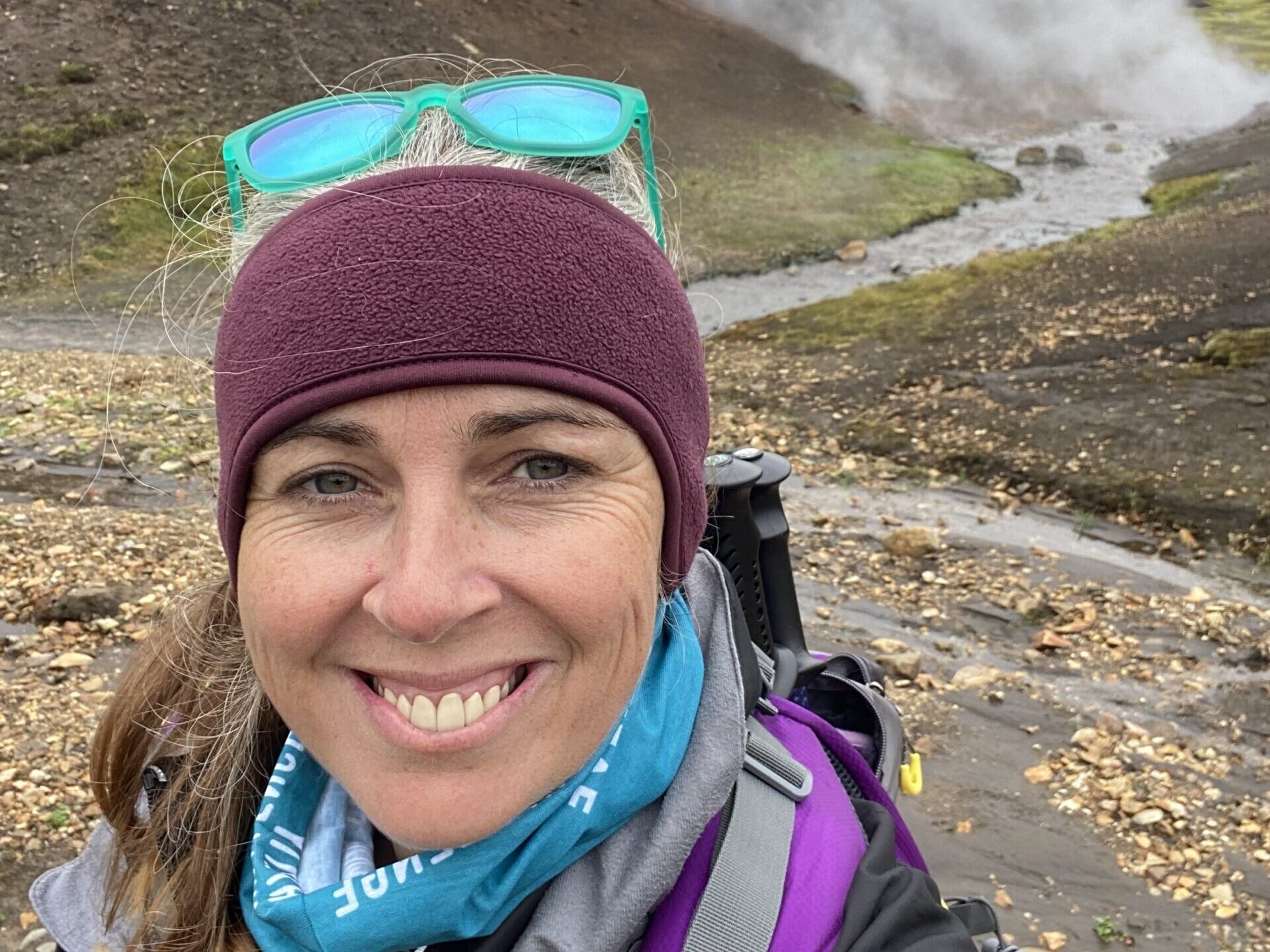
Before boots ever touched trail, we had a travel day that felt like an adventure in itself.
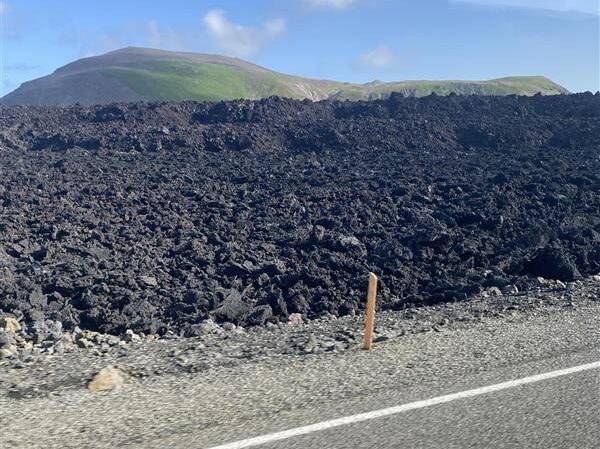
Some of the newest land on earth
Iceland, I learned, is about the size of England and Wales combined, but with barely a fraction of the people. Over 90% of the land is old lava, shaped by eruptions over centuries. As we drove from the airport south and then inland toward the Highlands, the scale of it hit me: black lava fields stretching as far as the eye could see – jagged, raw, and still so new in geological terms. Some of the lava we passed was only a year old -some of the youngest land on earth.
We rolled through Grindavík, now a ghost town after the recent eruptions. No one knows when people might return – not for another 10 years at least – and the silence of the empty houses was haunting. Recent eruptions had only finished weeks beforehand. Iceland doesn’t just have volcanoes – it is volcanoes.
The landscape grew wilder as we pushed deeper into the interior. In places, you could see for 35 kilometres in every direction, nothing but mountains, ridges, and lava plains. Beneath it all lay sleeping giants: volcanic calderas, including, Hekla, one of the biggest in Iceland. Tonight, we’d be camping in its shadow.
Iceland’s geology is extraordinary. The country straddles two tectonic plates, half North America, half Europe, so the earth here is restless. Earthquakes often cause more damage than lava flows. Lava itself can pile up to 10km deep, layer upon layer, forming the very bedrock we stood on. You can even own a volcano in Iceland, which felt absurd to me as I stared out the window at one looming on the horizon.
The drive told its own story: roads cracked and shifted by quakes, some fallen away entirely by metres. We passed Selfoss, the largest town in the south, before climbing into the Highlands. Along the way, our guide pointed out where you could drink straight from the streams, unless they were warm, in which case geothermal heat made them undrinkable. Glacial rivers, too, looked pure but were often thick with silt from the ice.
The bus ride itself became part of the adventure. The roads were little more than tracks carved through lava fields, full of craters and ruts. With almost no suspension to cushion us, every bump had us bouncing out of our seats. Shrieks and laughter filled the bus as we caught air, hands grabbing for anything solid while grins spread across tired faces. It was equal parts rollercoaster and endurance test, and somehow, it bonded us before we’d even taken a single step on the trail.
By the time we wound up and around Hekla, I felt small, excited, and slightly nervous. This was no ordinary backdrop for a trek. This was fire and ice in its rawest form. And tomorrow, we would begin walking straight into it.
Day One: Landmannalaugar → Álftavatn (11 hours hiking time – 15 miles/25km)
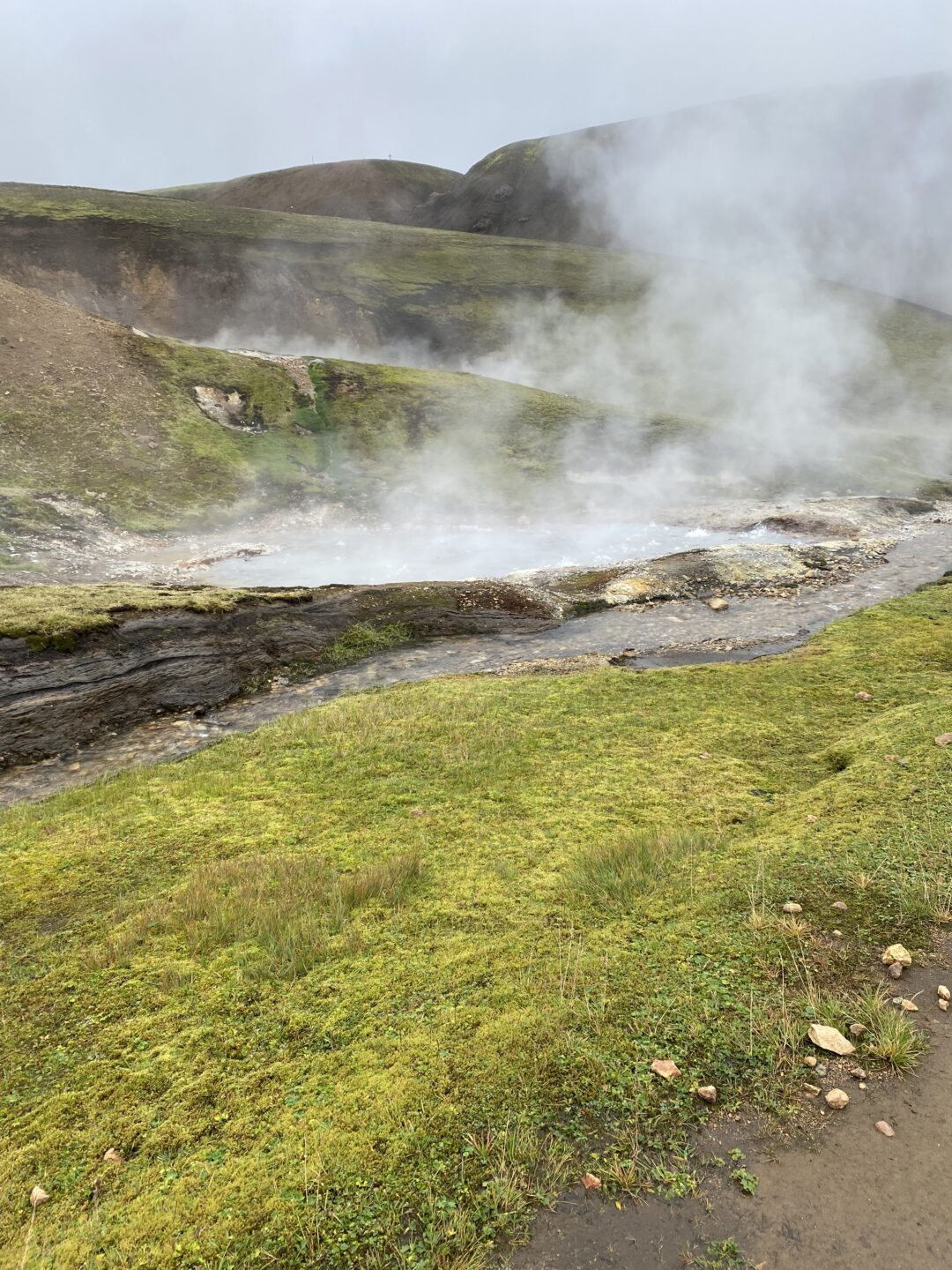
Waking up on my first morning in Iceland, I quickly learned that “camping on gravel” really means camping on gravel. My hips knew it. But the sting of the ground was forgiven the second I shuffled across to the nearby hot springs, dipped my toes in, and felt warmth so at odds with the biting morning air. Steam swirled up around me, and I couldn’t help but smile: this is it.
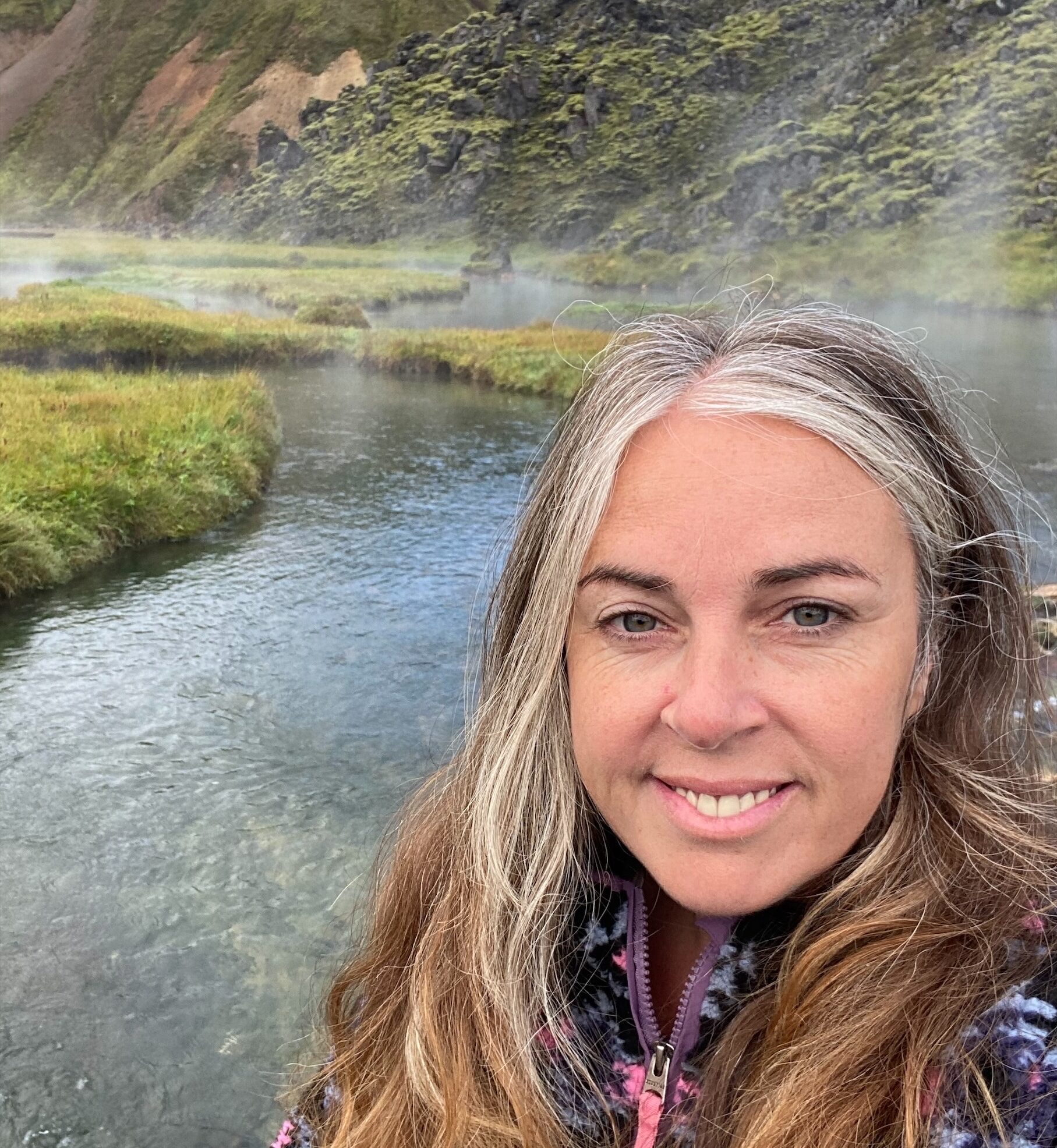
Hot springs on the first morning
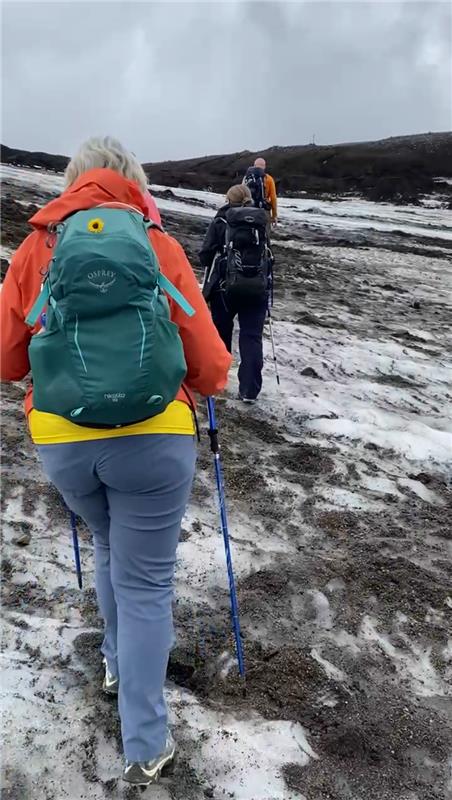
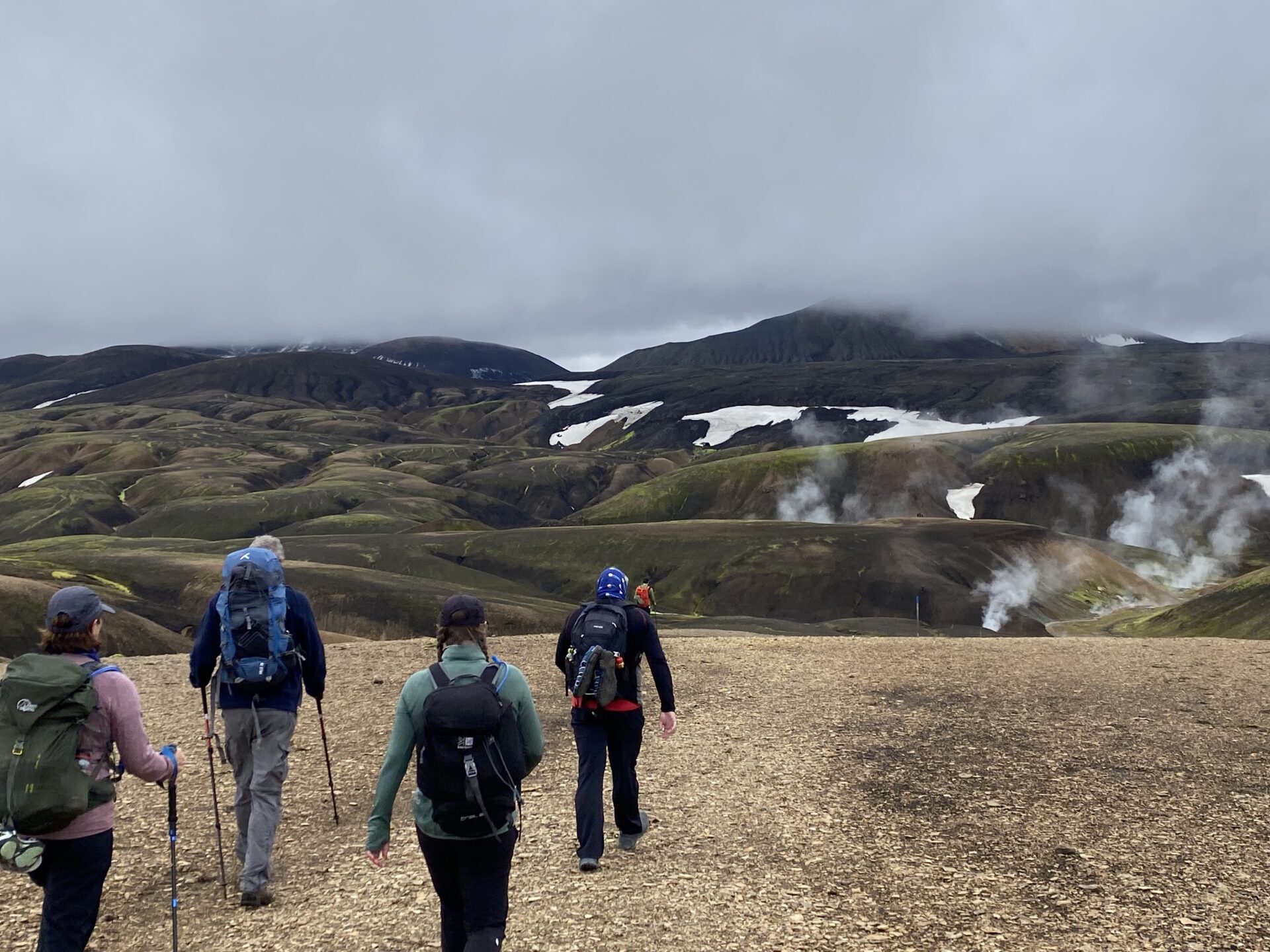
Breakfast was porridge – thick, hearty, and exactly what we needed (and my preferred choice over muesli or yogurt). Our group was buzzing, breaking down the tents and faffing with daypacks. I, like the whole group, definitely overdressed, piling on layers like an overcautious mum had packed my bag, but within half an hour of walking into Iceland’s most colourful mountains, the layers were peeling off as the sun burned through and requests for sunscreen passed along our trekking line.
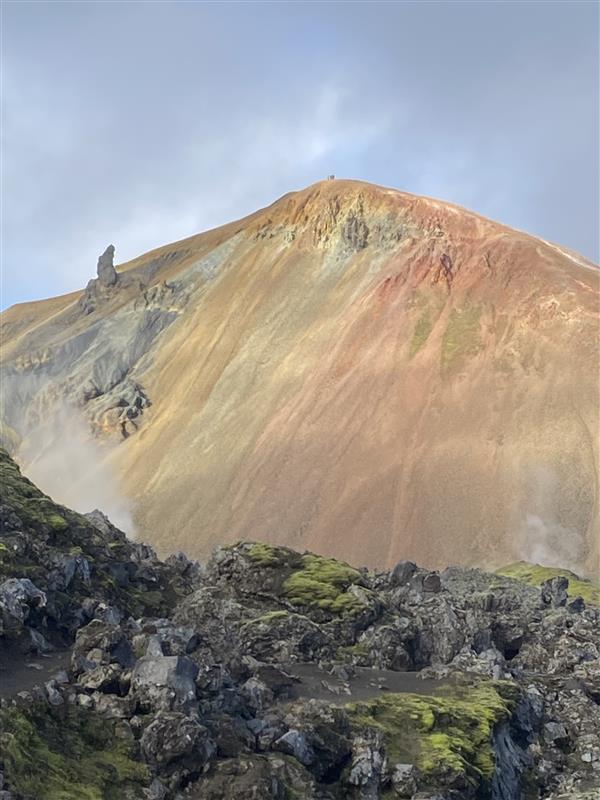
The path wasted no time. Straight into snow patches, muddy slides, and sulphur-smelling steam vents that assaulted the senses. At points, the boiling water bubbling through the earth gave off a stench so rotten I could practically taste it. And yet, all around, the landscape shimmered: black lava fields, patches of snow, and colours painted across the hillsides like brushstrokes. Landmannalaugar is famed for its rhyolite peaks, painted in streaks of red, green, yellow, and purple, (although Instagrammers will photoshop them to make them look more extreme, they’re still impressive to view with the naked eye!) and we were walking right through them. Behind us, the black Laugahraun lava field, born from a 15th-century eruption, stretched into the valley.
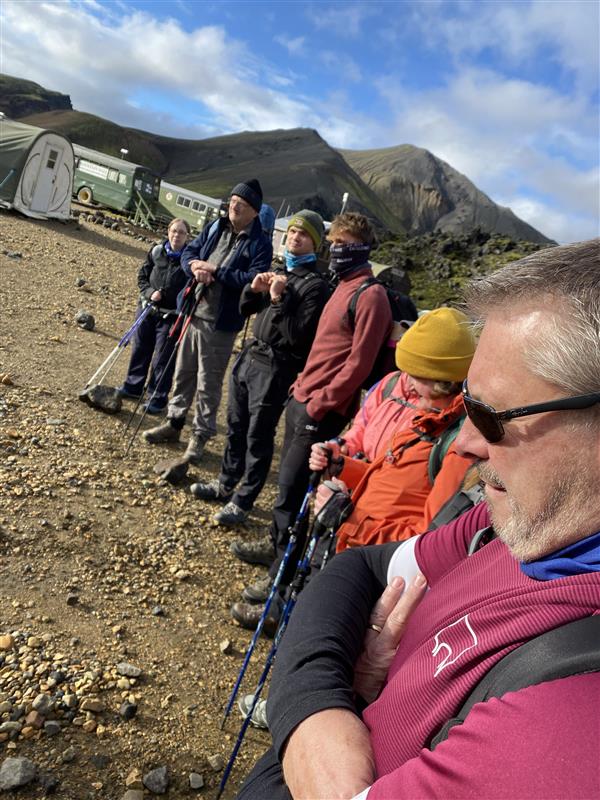
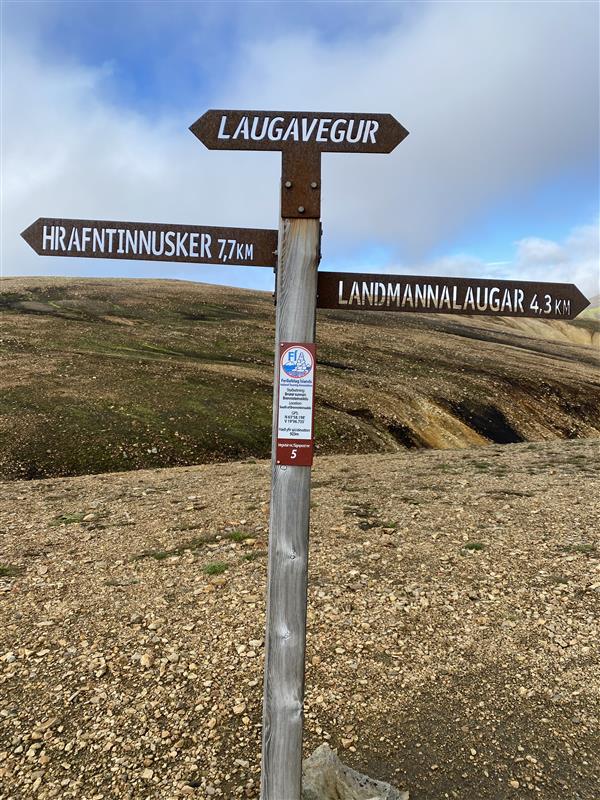
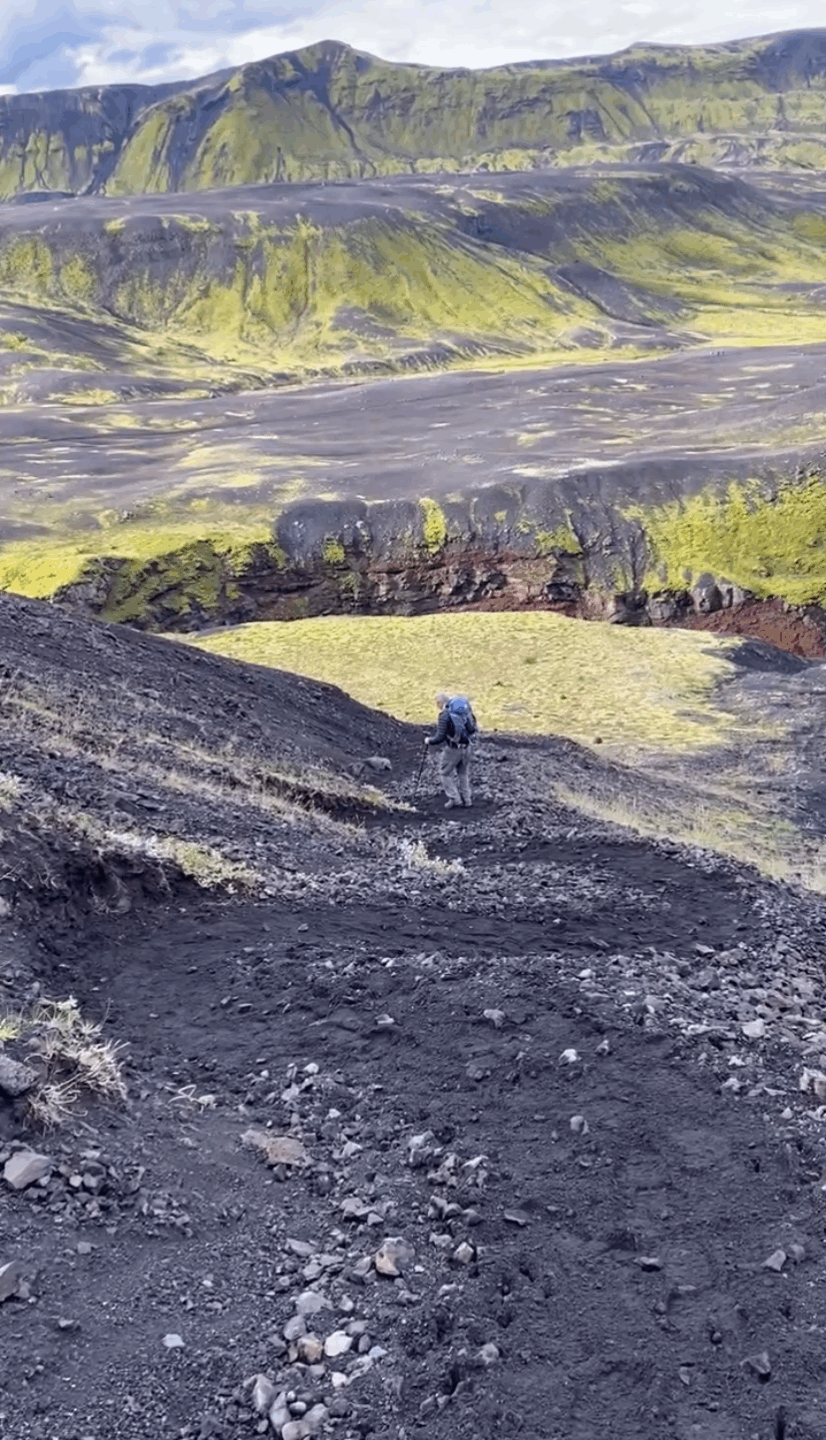
Mid-morning delivered the first real heart-in-mouth moment. The path ahead had been washed away by overnight rain, leaving the drop on either side far too precarious. Our guide announced we’d have to turn back. Easier said than done – my knees locked, shaking, with no clue how to pivot around on a crumbling ledge. Luckily Sam and George, two of the younger and braver ones, practically hauled me around. We backtracked, (thank god – the adrenalin had dropped right out of me) then crossed over an ice bridge instead. The moment my boots hit the frozen surface, the temperature dropped like someone had opened a freezer door. Just this 10 minutes of walking on these two very different surfaces were both magical and terrifying.
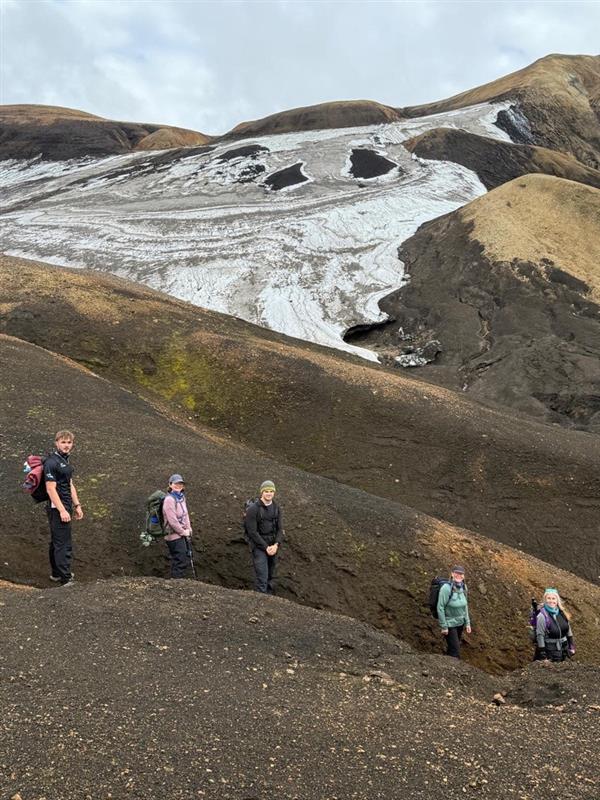
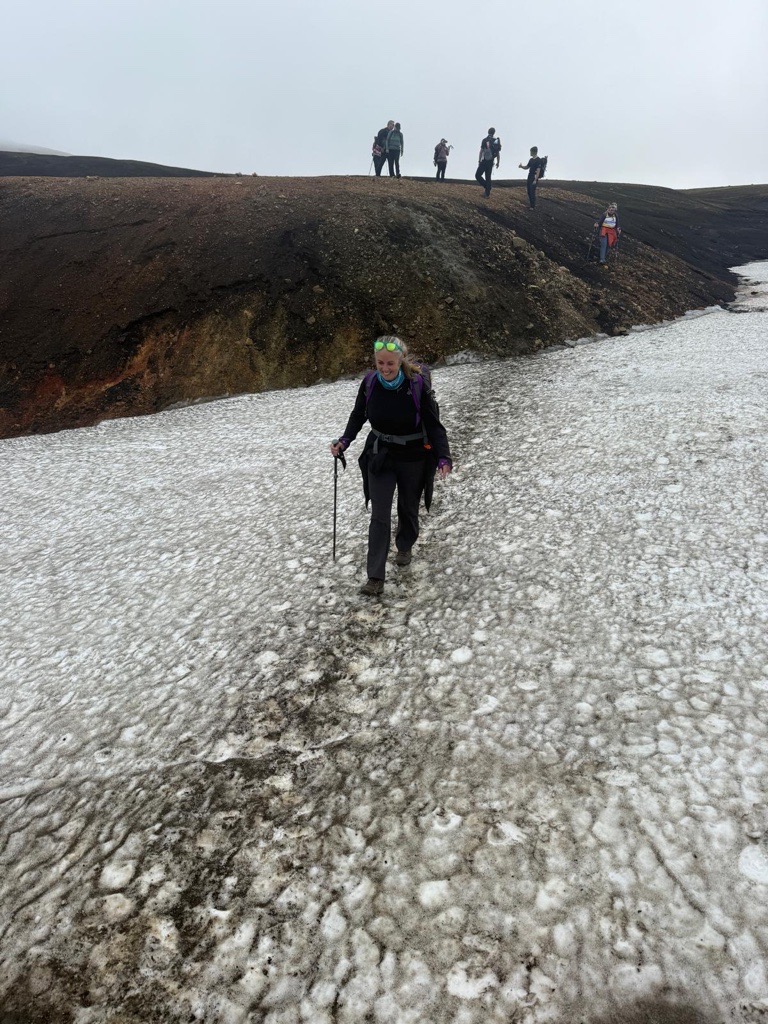
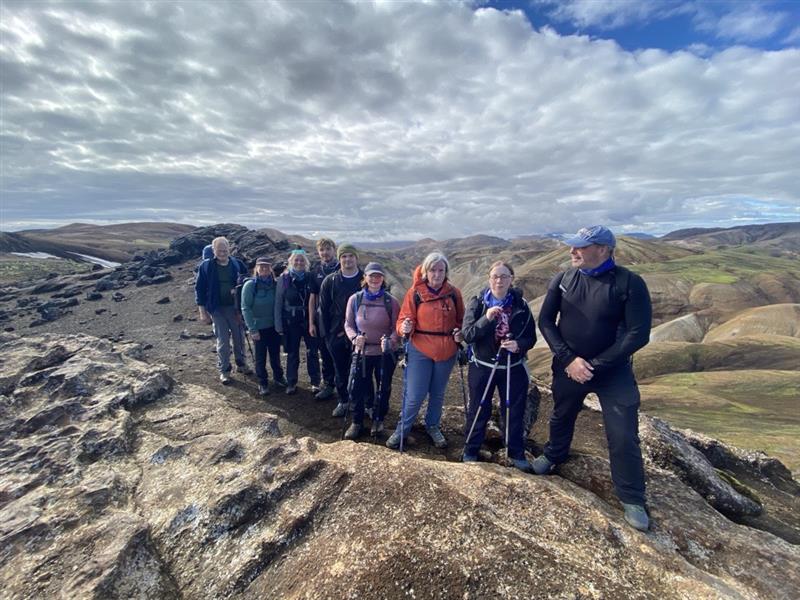
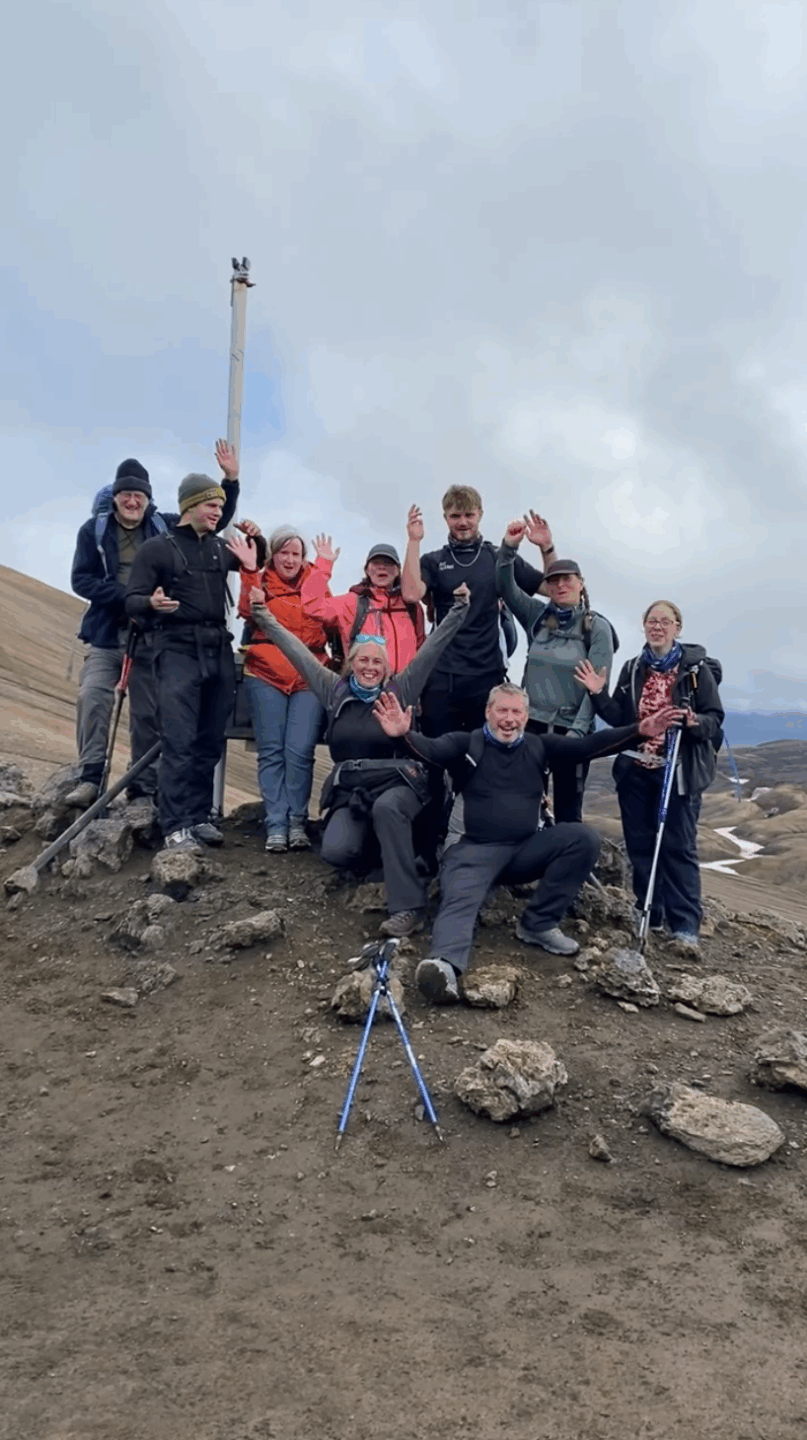
There were regular reminders throughout the day of how active the ground beneath us actually was, as the ground hissed and bubbled with geothermal life. Sulphur steam vents belched out the unmistakable smell of rotten eggs. The trail climbed quickly into snow patches, and before long we were at roughly 3,600 feet: about the same height as Snowdon back home. We stopped to film ourselves cheering at the top, giddy with the thrill…or perhaps the altitude!
Lunch with a view
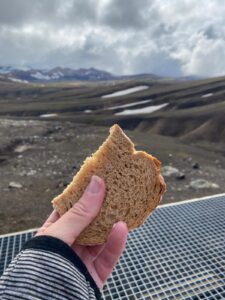
At lunchtime, we tucked into simple sandwiches – prepared at breakfast that morning – with a backdrop stretching across snowfields and glaciers.
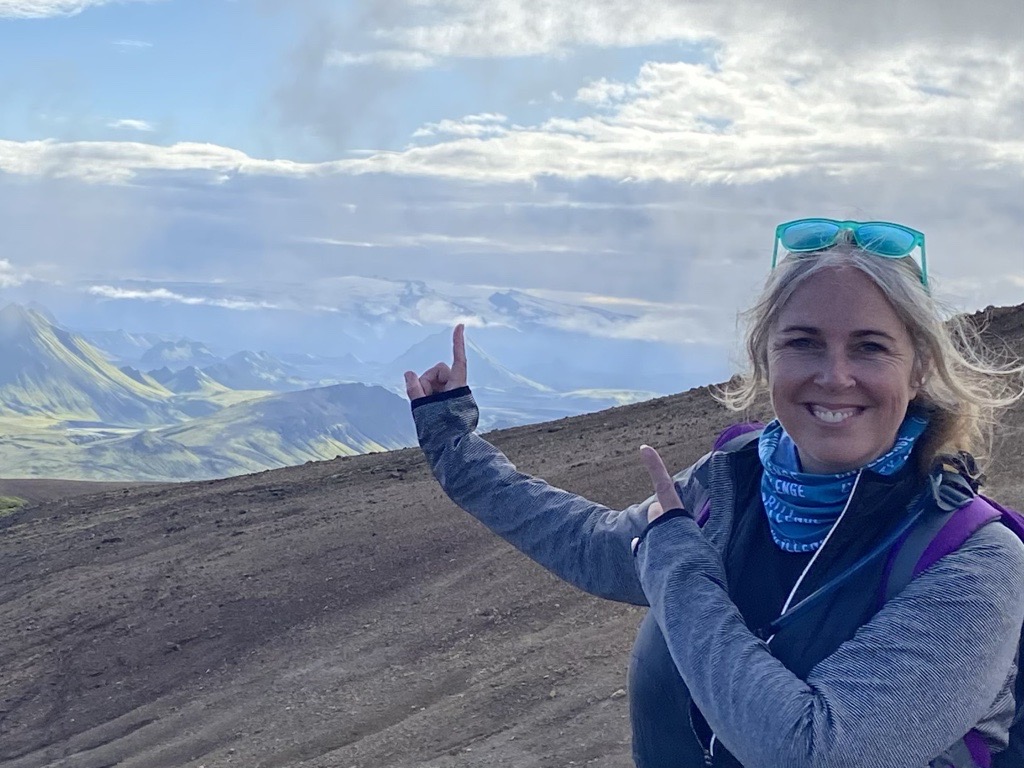
The afternoon was a grind of scree slopes and obsidian rock glittering underfoot. Multiple ups and downs, with out-of-this-world views including a nemesis of mine: Eyjafjallajökull.
This was the very volcano that caused the ash cloud chaos in 2010.
At the time, I’d been working for a travel company, firefighting cancellations and travel madness. While Brits were dusting ash off their cars, Icelanders had barely noticed disruption at all. To now come face-to-face with it, albeit in the distance, felt oddly personal.
Eyjafjallajökull
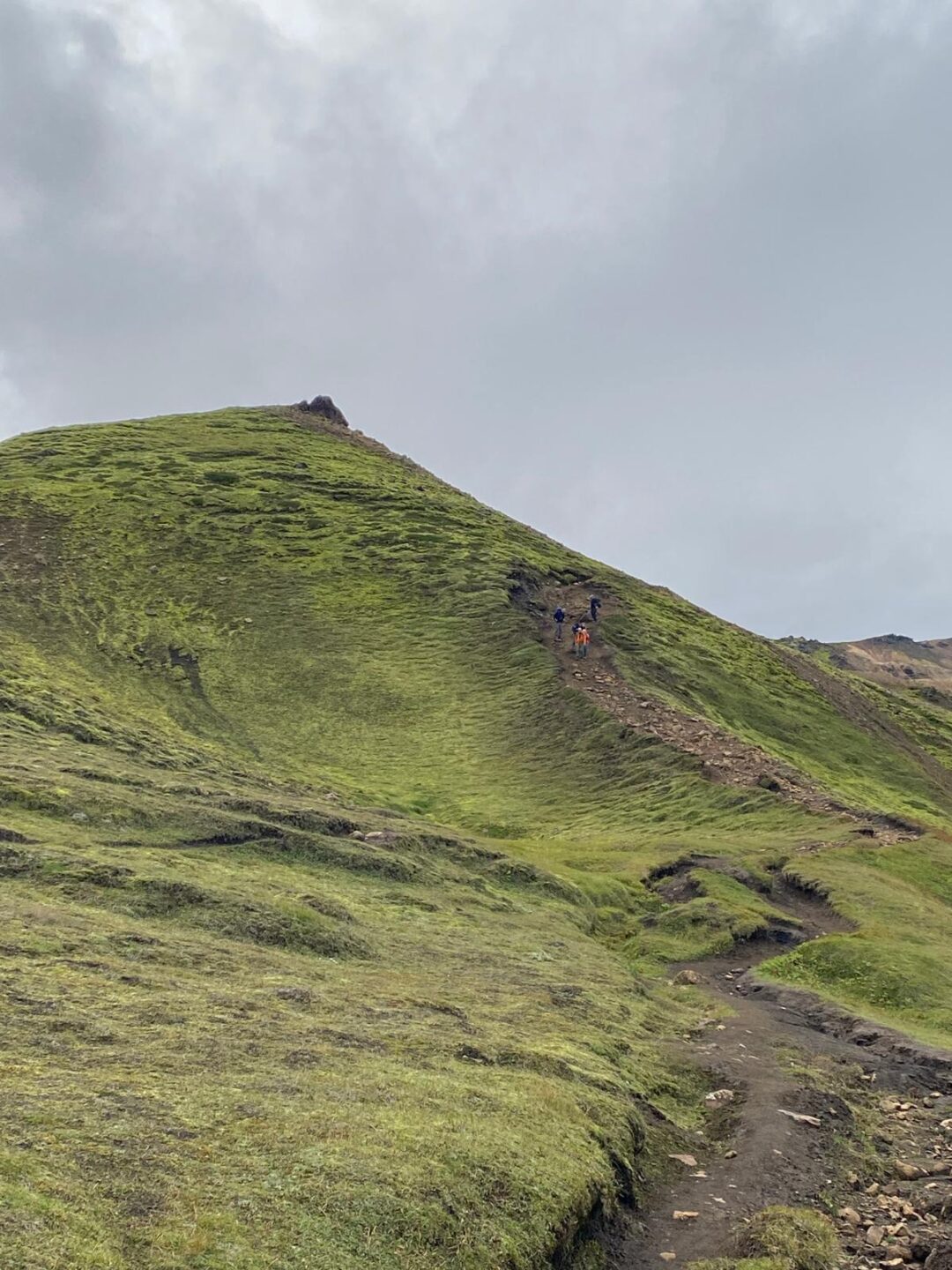
By afternoon descents, I’d mastered what I can only describe as “the penguin shuffle” feet out, bum back, waddling my way down crumbling trails. My thighs burned less than my toes; every downhill step felt like my boots were slamming my feet into submission. The pain was made more joyful by singing to my fellow hikers made up lyrics to the TimeWarp: “‘Let’s do the penguin waddle again, there’s rocks to the left and moss to the right, bend yours knees and your hips and stick your bum out wide …let’s do the St Margs challenge again!’. I’m still not quite sure how it didn’t catch on…
Our first river crossing came with a rope strung across the water, a practice run for what was still ahead. It was icy, but manageable, and we were delighted to reach the other side. Our first water win!
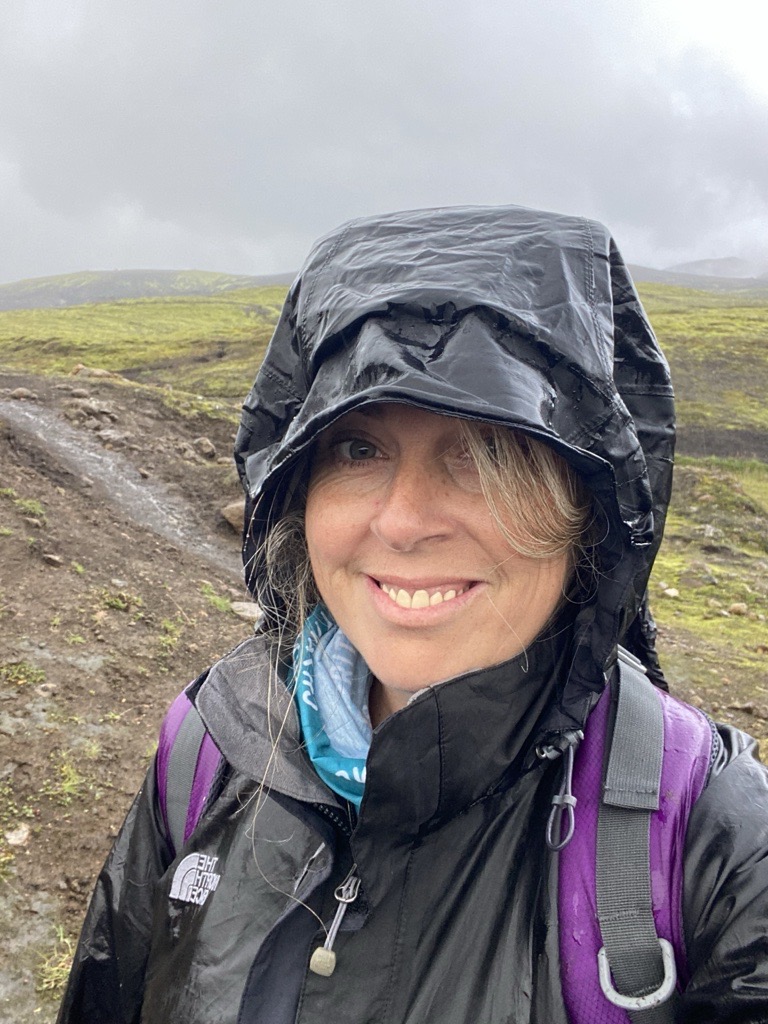
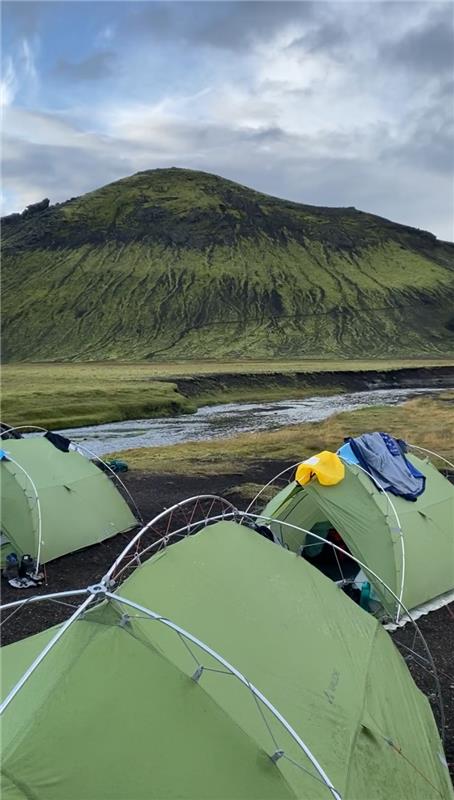
The weather, though, oh, Iceland. One minute clear skies, the next, a hammering of rain so hard it drenched us through despite our waterproofs. Changing footwear following our river crossing, the heavens really did just open! Boots squelched with puddles forming inside them. When we finally stumbled into Álftavatn Valley (Swan lake), dripping wet and exhausted, I could’ve kissed the rocky campsite. The boys cracked out whisky, we gulped hot chocolate, and I inhaled soup as if my life depended on it. Later, even with wet clothes strung about the tent, a hot shower (queue and all) felt like luxury. Dinner was spaghetti bolognese, which I demolished like I hadn’t eaten in months. Crawling into my sleeping bag afterwards was pure heaven.
Day Two: Álftavatn → Emstrur (8 hours hiking time – approx 12Km)
Porridge again. Hot chocolate too, our constant companion. My toes were swollen from yesterday, and I put off shoving them into my sodden boots until the very last possible second. With yesterday’s wet clothes flapping from the outside of my day bags like bedraggled birds, we set off.
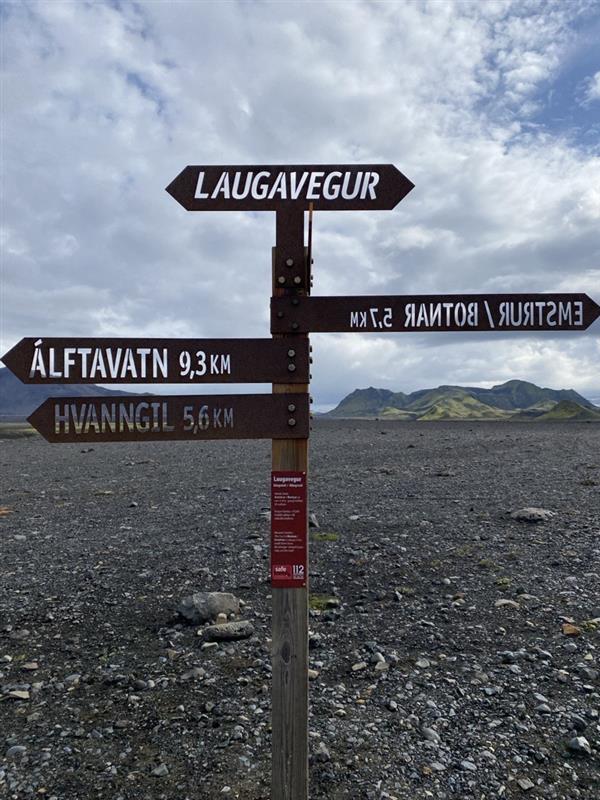
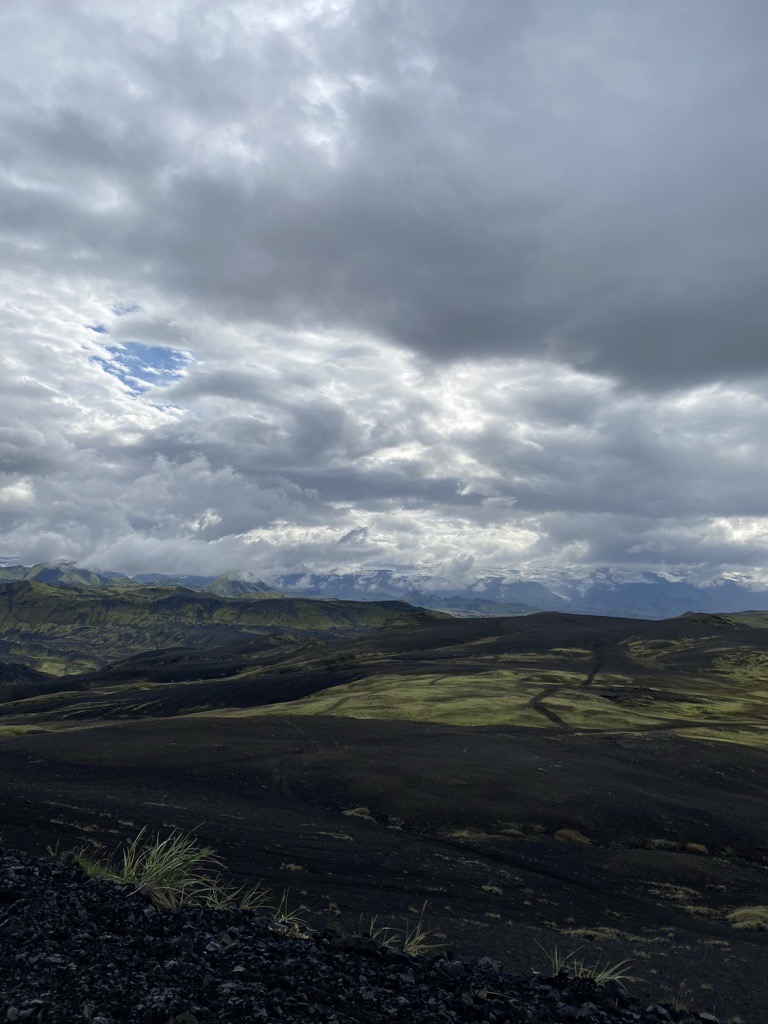
The landscape changed dramatically: gone were the colourful rhyolite mountains, replaced by dark volcanic deserts shaped by the mighty Mýrdalsjökull ice cap, which loomed to the south. Beneath it lies Katla, one of Iceland’s most active and dangerous volcanoes. The plains here were stark: black sand, shifting rubble, nothing growing except the odd fragile moss. It looked like another planet. More than once I thought: this is straight out of the film, The Martian. Vast, empty, and silent, oddly beautiful and gorgeously peaceful.
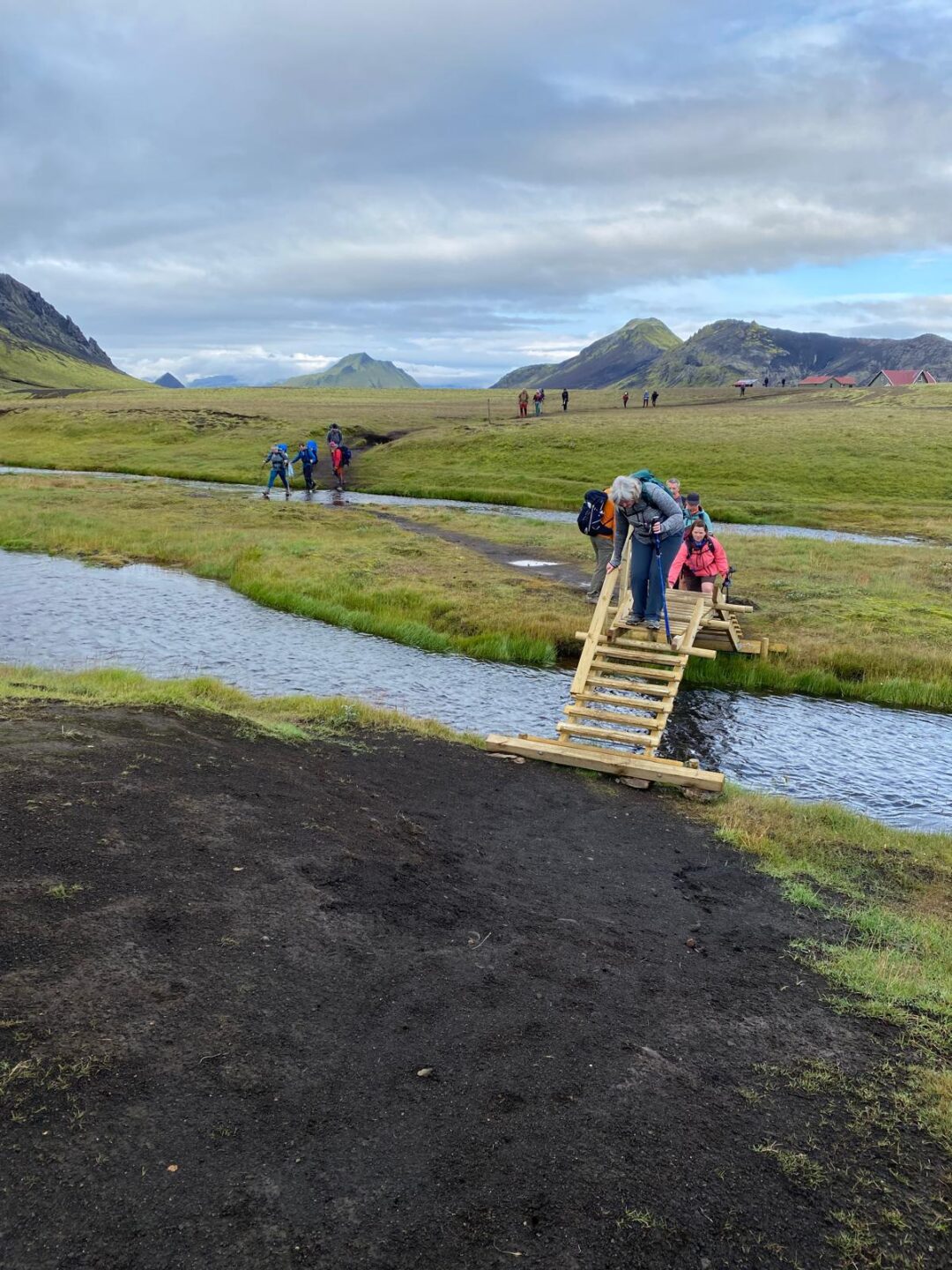
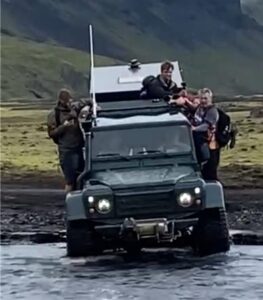
Not the traditional river crossing
An early river crossing turned into a comedy show. Just as we arrived, our support jeep rumbled up, and instead of wading, we clambered onto its railings and hitched a ride across, laughing as the freezing spray splashed us. Hikers on the bank filmed us, cackling at the sight, cheering us on as we crossed like a parade of misfits.
Lunch that day was by a fast-flowing river, sunshine warming our backs. We lounged on the rocks, trading highlights of the trek so far. Spirits were high. The afternoon brought more undulating climbs across the barren sands, before we rolled into Emstrur, a campsite staggered across levels of a hill. Whilst half the group opted to walk an additional 3km for an extra view, the other half – including myself – went straight to camp and set up for all of us to give the tents time to air and hopefully dry off a bit!
That evening was special. We celebrated Mark’s 60th birthday with a feast that surpassed anything I’d imagined possible in a camp kitchen: BBQ’d lamb chops, veggies drowned in melted cheese, and spiced potatoes that disappeared in seconds. And yes, more hot chocolate. Love the hot chocolate.
Day Three: Emstrur → Þórsmörk (6–7 hours Approximately 11 Km)
The final morning came with a pang of sadness as we said goodbye to our support crew, the heroes who had kept us fuelled with food and hot drinks. We shared porridge, hot chocolate, and one last round of thankyou’s before we shouldered our packs.
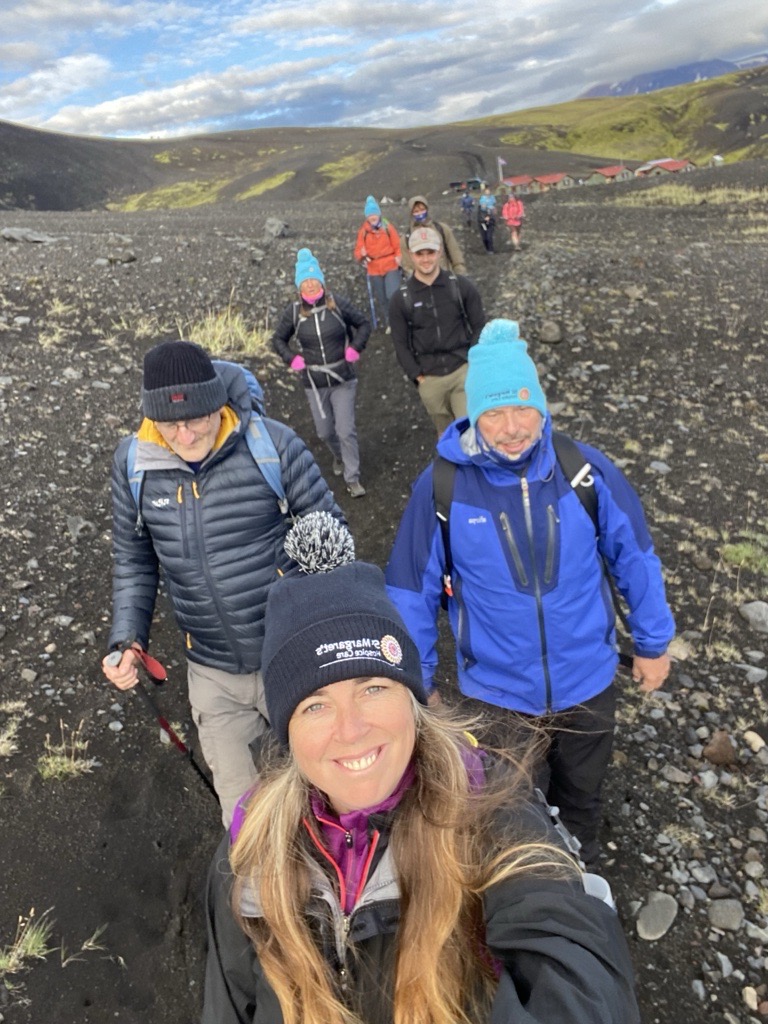
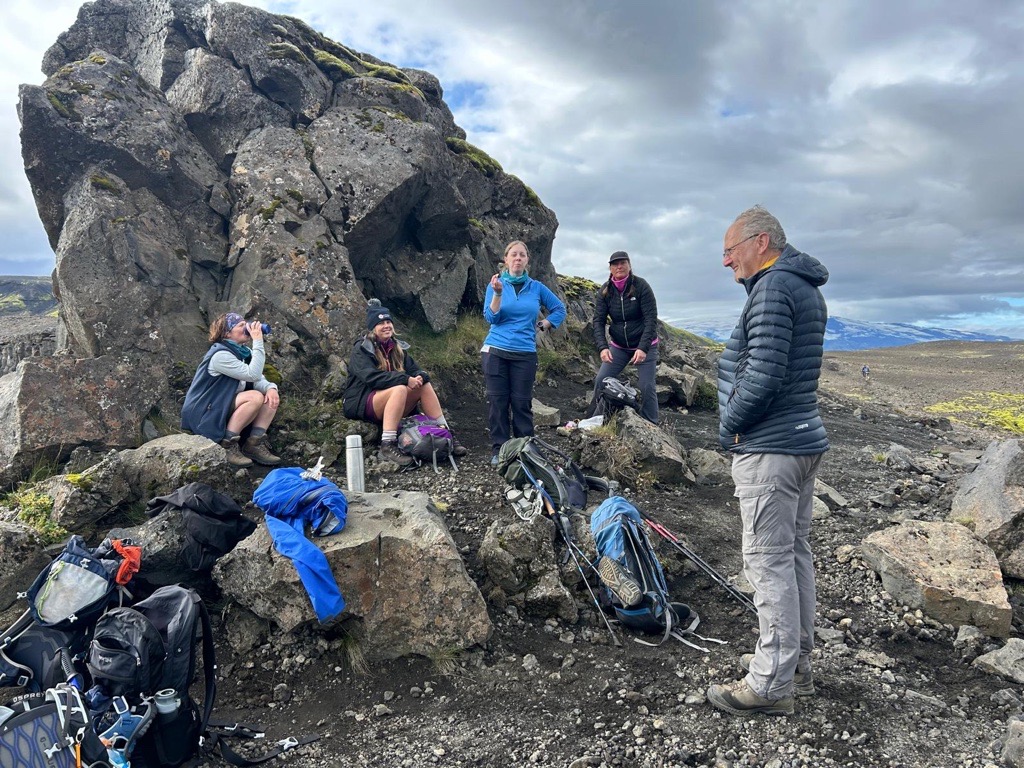
The route wound past views of the mountain we’d dubbed “the church” (or sometimes a whale, depending on the angle). But today, in the right light, there was no mistaking it, it was Pumbaa from The Lion King.
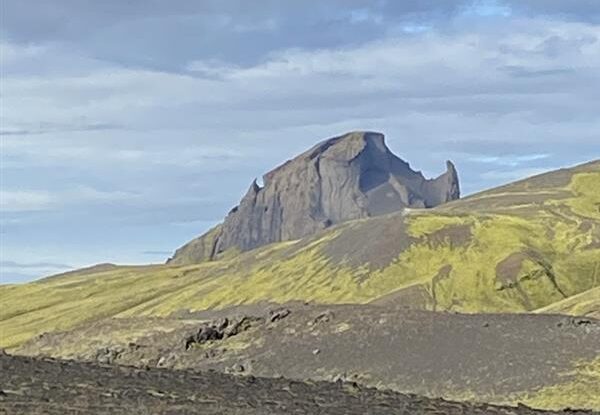
The "Pumbaa" mountain
Soon, we were faced with a steep climb straight up Markarfljót gorge – a canyon over 200m deep carved by glacial meltwater – only to descend almost immediately onto the fastest-running river yet. Swollen by the previous night’s rain, it thundered past, looking every bit as cold as I was soon to discover.
This crossing was a new method – groups of three, tallest at the front, sidestepping across in unison. The water surged to the tops of my thighs, so icy I felt nauseous. We staggered out the other side, giggling with the shock of the water temperature, and being reassured by others that it would pass quickly.
From there, the trail softened into something gentler. Trees appeared -real trees! – and shrubs lined the path as we entered Þórsmörk, or “Thor’s Forrest.” After days of volcanic desert, stepping into greenery felt surreal. The final three kilometres were almost easy, though every step carried the weight of what we’d achieved.
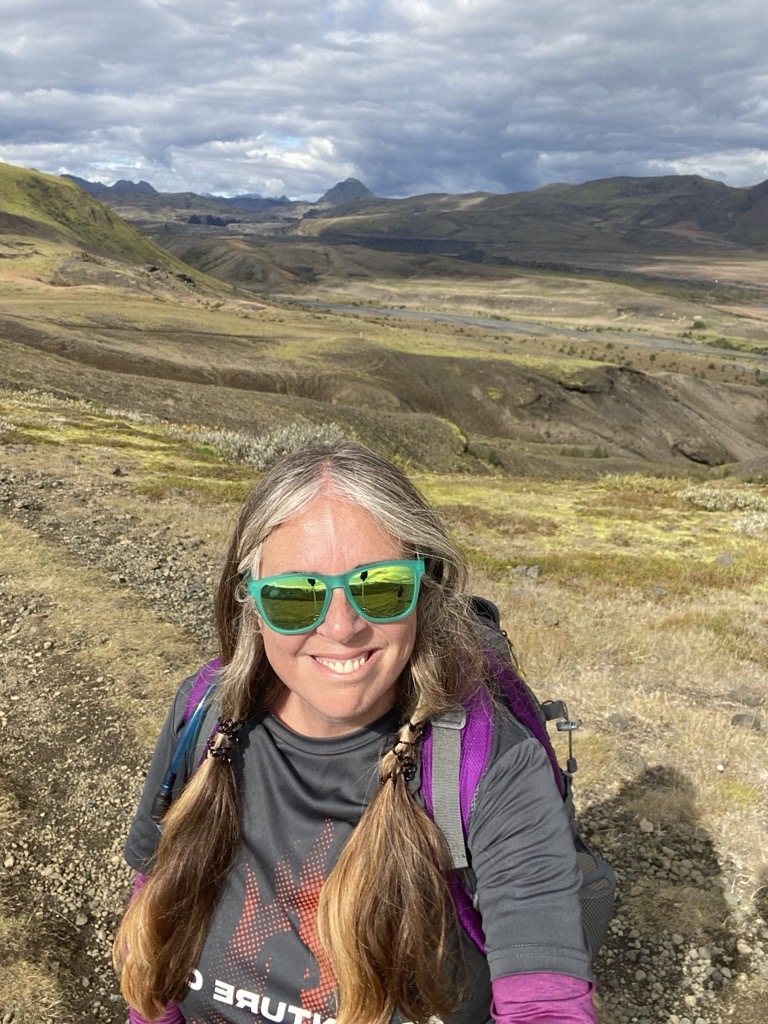
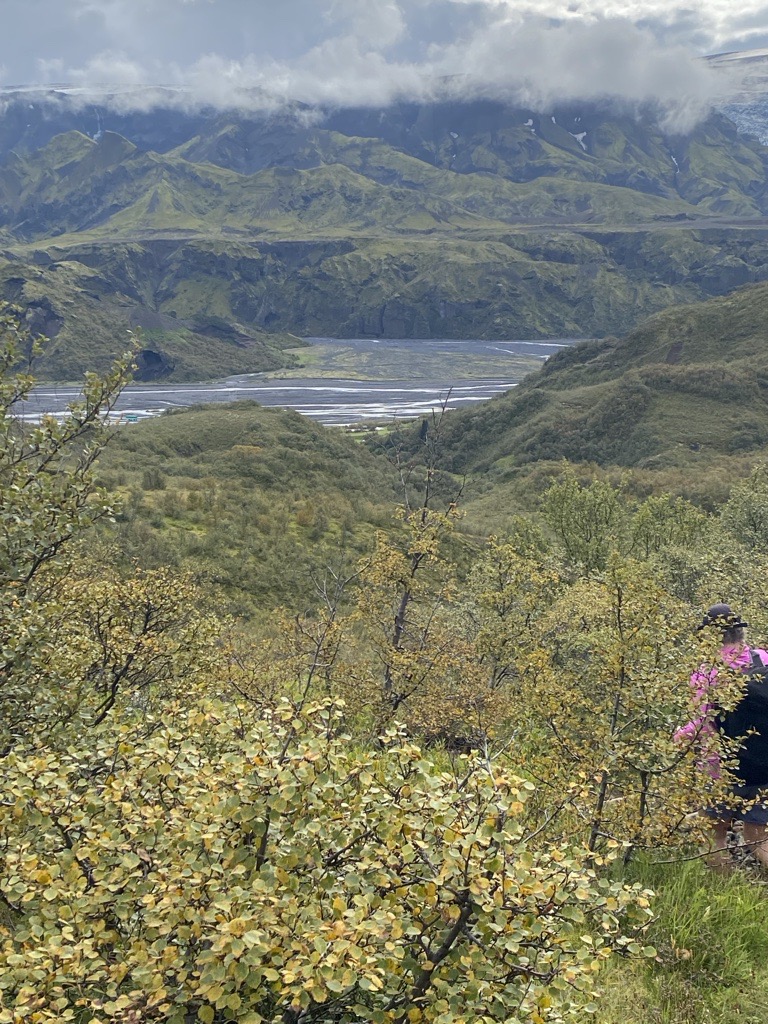
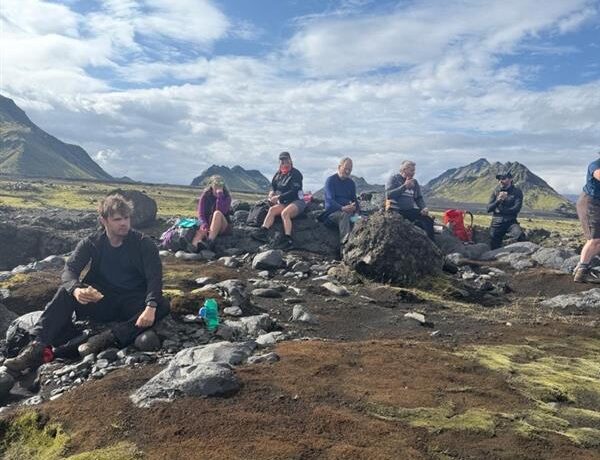
And then, just like that, we were there. 58km across some of the most challenging, raw, and spectacular landscapes I’ve ever seen. Feet battered, bodies aching, hearts full, we were all ready for a hotel shower, a celebratory dinner and a visit to the Sky Lagoon to follow first thing in the morning.
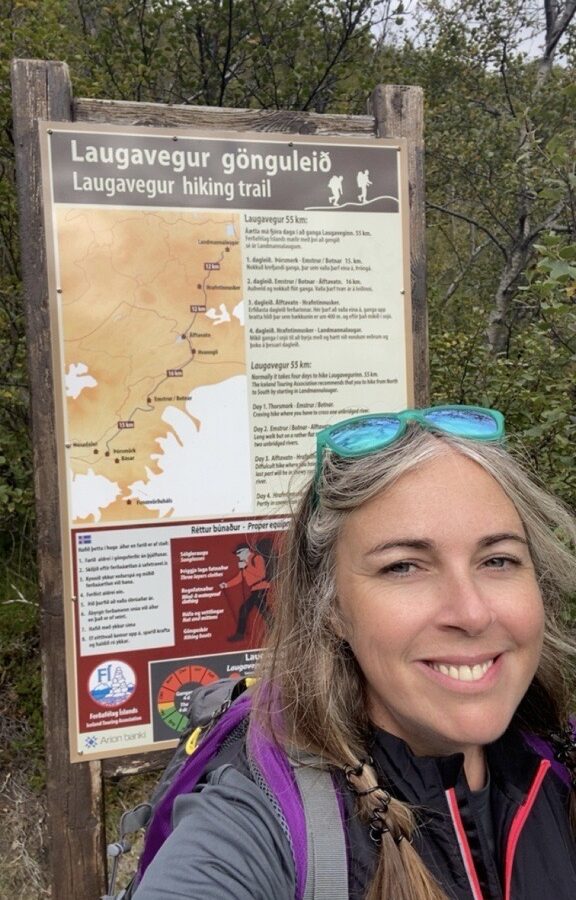
Hayley at the finish line
The Morning After: Sky Lagoon Bliss
The morning after our trek, I wasn’t aching so much as I was tired to my core, the kind of tired that comes when adrenaline has carried you through something epic and then finally starts to ebb away. My body wasn’t broken, but it felt like I’d used every ounce of energy out there on the trail.
Enter the Sky Lagoon. Just walking in felt like stepping into another world: sleek wood, soft lighting, and then that first glimpse of the infinity-edge pool spilling straight into the Atlantic. Sliding into the steaming water was pure joy. Heat wrapped around me, the sun on my face, and suddenly I was both completely relaxed and completely alive, drinking in the success of our achievement.
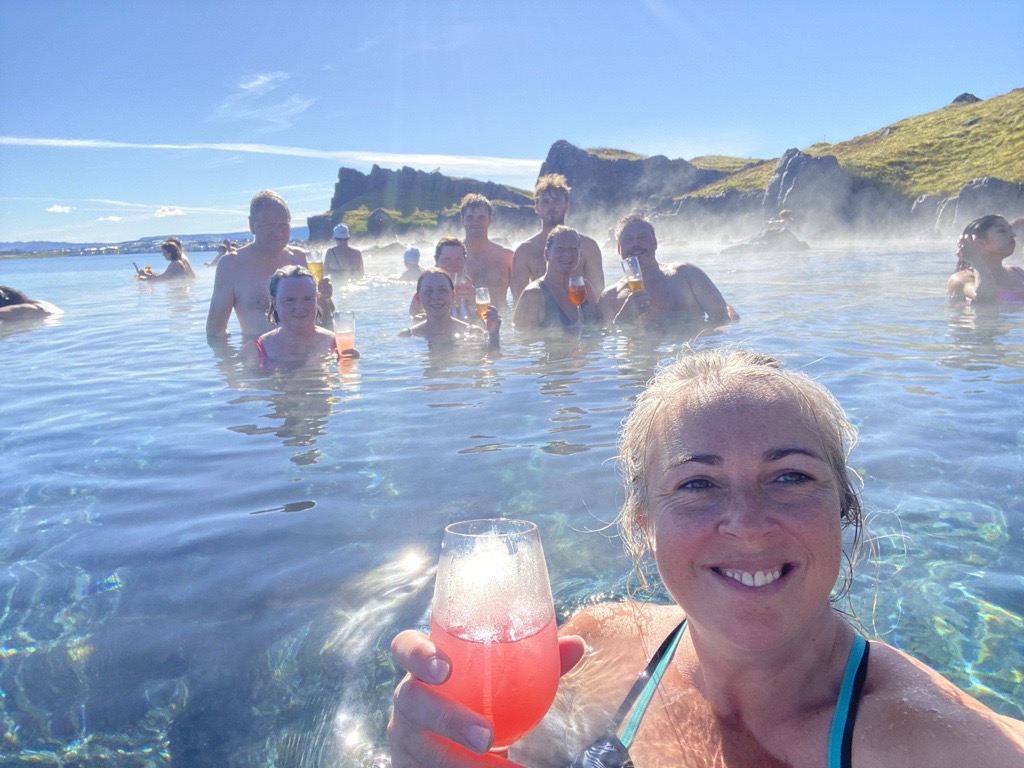
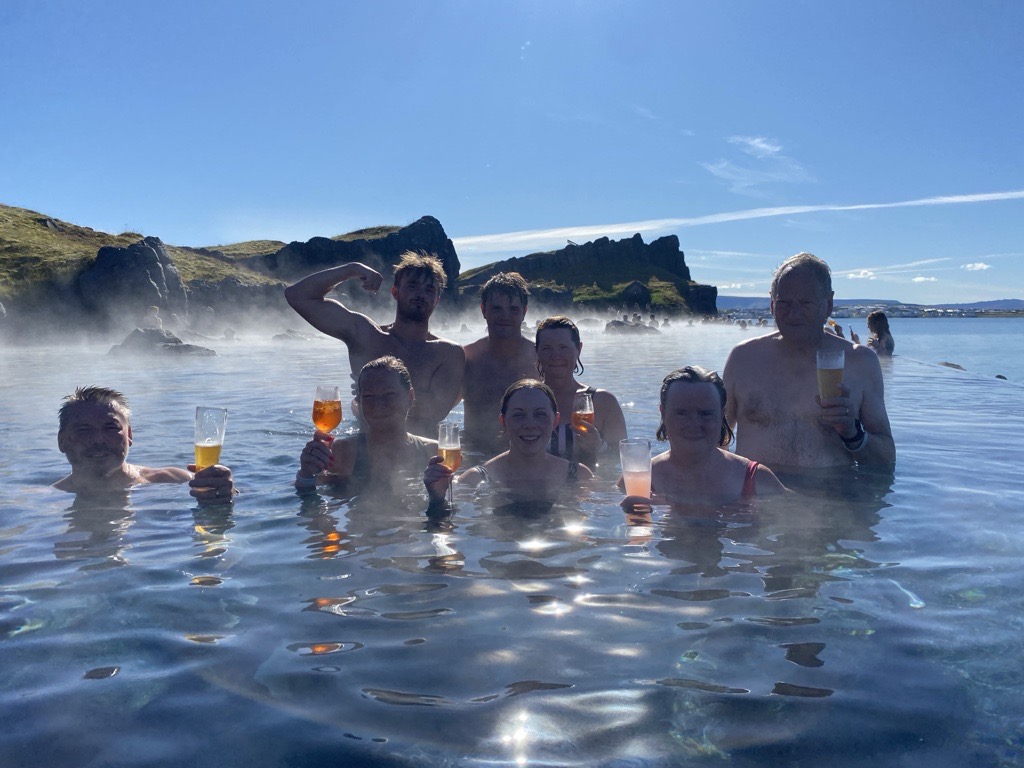
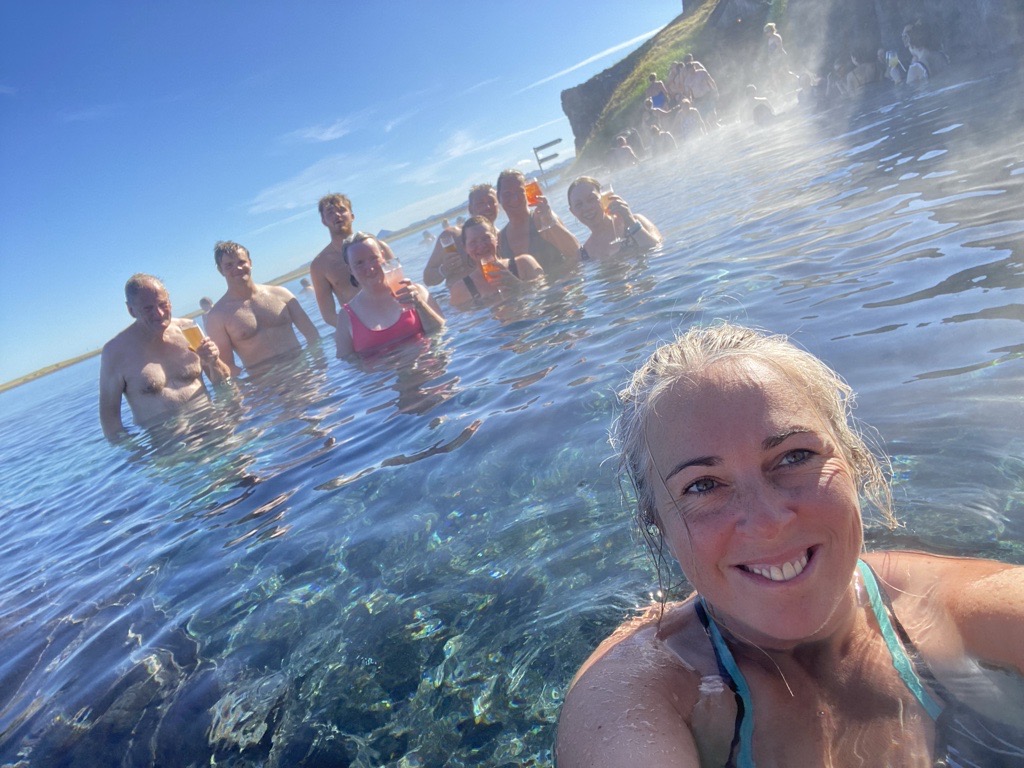
We drifted through the seven-step ritual, Iceland’s version of pressing reset;
Soak in the lagoon – easing into the hot water, gazing out over crashing waves and volcanic cliffs.
Cold plunge – bracing ourselves to dunk into icy water. The shock was instant, like knives against the skin, but the knowledge that we would be warm again in moments made it a satisfying, breathtaking moment.
Sauna with a view – sitting in silence, heat pouring over us, as the vast Atlantic spread out before us beyond a giant, glass wall.
Cold mist – stepping back into a fine, cooling spray that instantly grounded us after the dry heat.
Exfoliating scrub – here’s where the magic happened. One of our hiking buddies, Anne, casually revealed she was a massage therapist, then helped to rub the mineral salt scrub into our backs. An added treat in our already luxurious spa treatment.
Steam room – thick, warm clouds engulfed us, the salt working deeper into our skin as we sat in the mist.
Final soak – after a shot of local Icelandic crowberry juice, back into the lagoon, muscles loose, skin tingling, spirits lifted, with time for one more cocktail to enjoy as we all said well done! Sitting back with a drink in hand, still half-submerged in warm water, laughing with the group as we clinked plastic glasses against that wild Atlantic backdrop.
It felt like the perfect finale. Not recovery, exactly, but revival. A toast to what we’d achieved; to Iceland itself for giving us one of the most exhilarating journeys of our lives, and of course; to St Margaret’s.
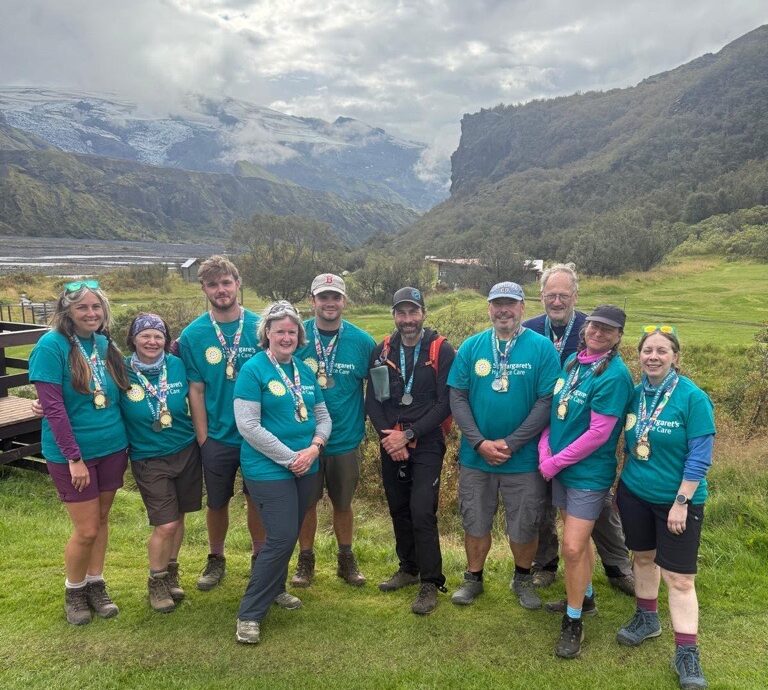
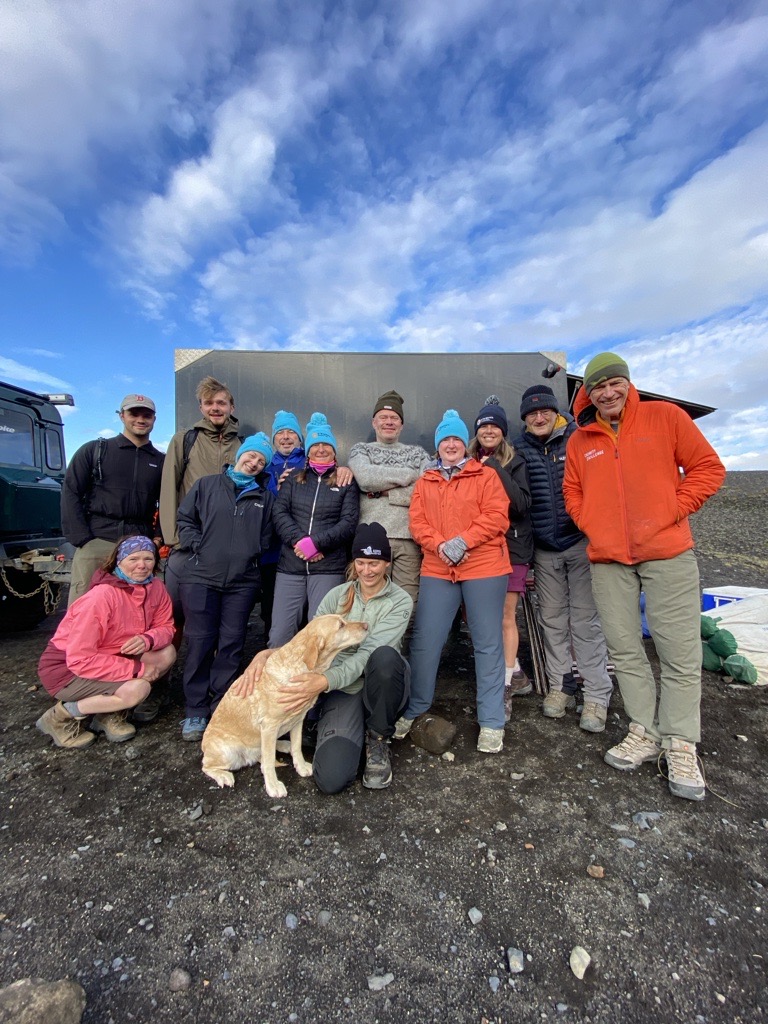
The trek team
Every step of the Laugavegur Trail had been a challenge: the snow, the scree, the rivers, the rain. But no matter how tough it felt in the moment, it was nothing compared to the daily challenges faced by individuals living with life-limiting illnesses and their families. Trekking across Iceland tested our bodies and our resolve, but it also reminded us of the strength, dignity, and resilience shown every day by those St Margaret’s cares for. This journey was our tribute to them, and our way of helping ensure that compassionate care continues for all who need it.