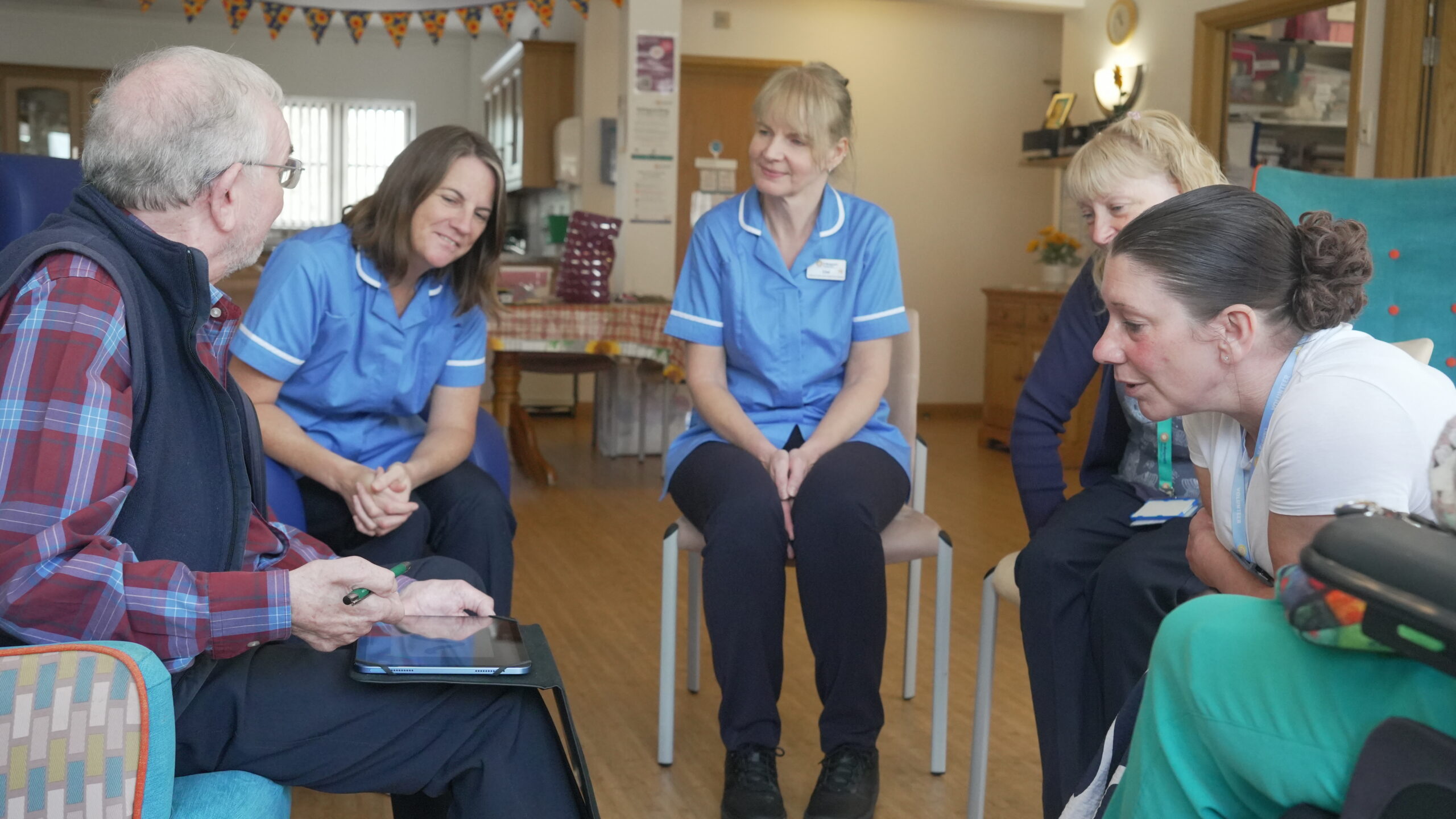
Our new neurological support group is already making a meaningful difference to people living with progressive neurological conditions across Somerset – and, following its initial pilot phase, the group is now continuing as a core part of hospice provision.
Launched in May 2025 at St Margaret’s Sunflower Centres in Taunton and Yeovil, the group was created in response to a clear gap in support for people living with conditions such as motor neurone disease (MND), multiple sclerosis, and other progressive neurological conditions. While we already supported around 90 people with neurological conditions each year, evidence suggested there may have been hundreds more across the county who were not yet accessing the specialist, holistic care they need.
For those attending, the group has quickly become a space for connection, understanding, and reassurance at a time when life can feel uncertain.
“It’s the camaraderie that matters most.”
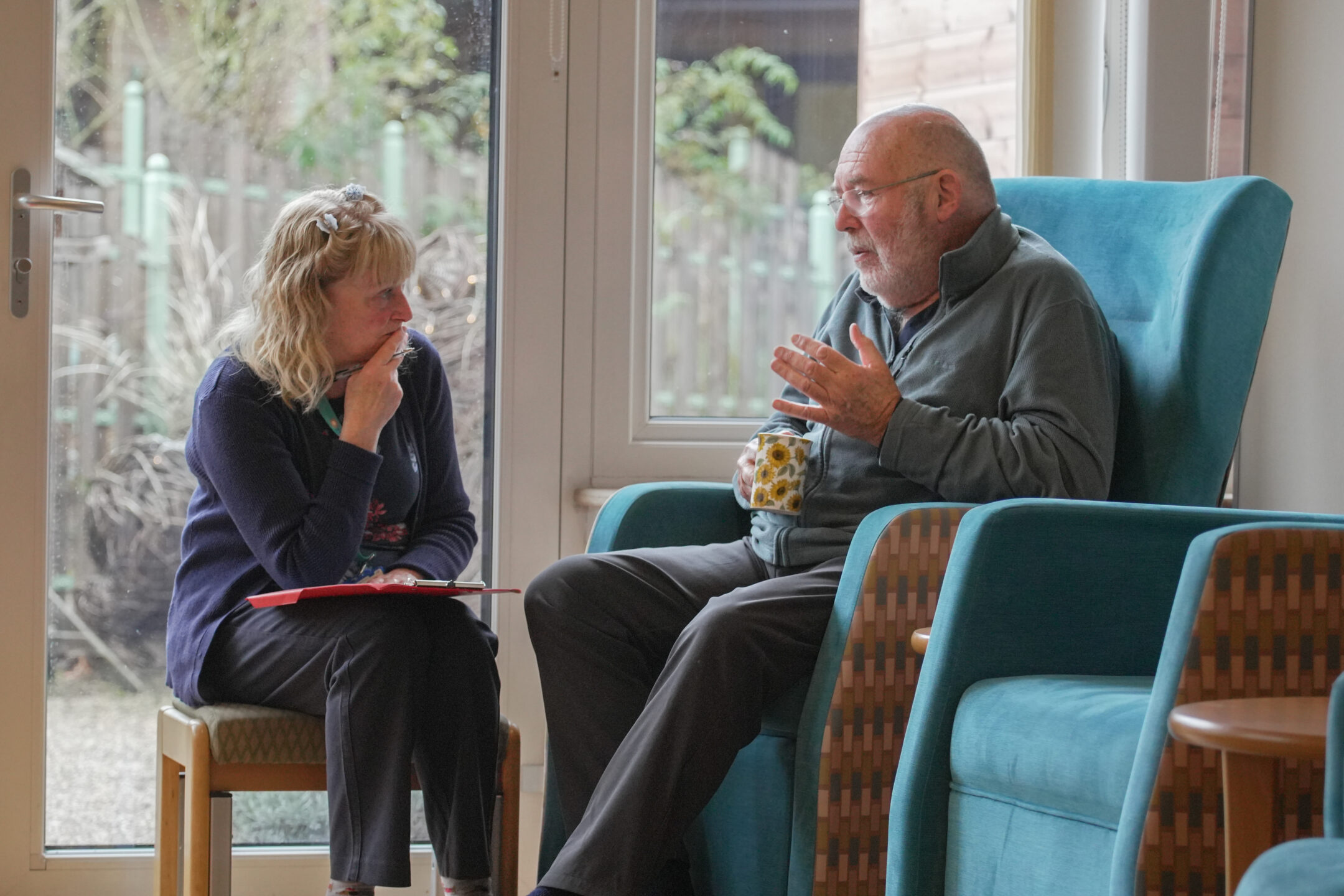
Alan, who was diagnosed with motor neurone disease six months ago, admits he wasn’t sure what to expect when he first attended the group – but that his mind has been quickly changed.
“It’s brilliant,” he says, “I’ve found it incredibly valuable.”
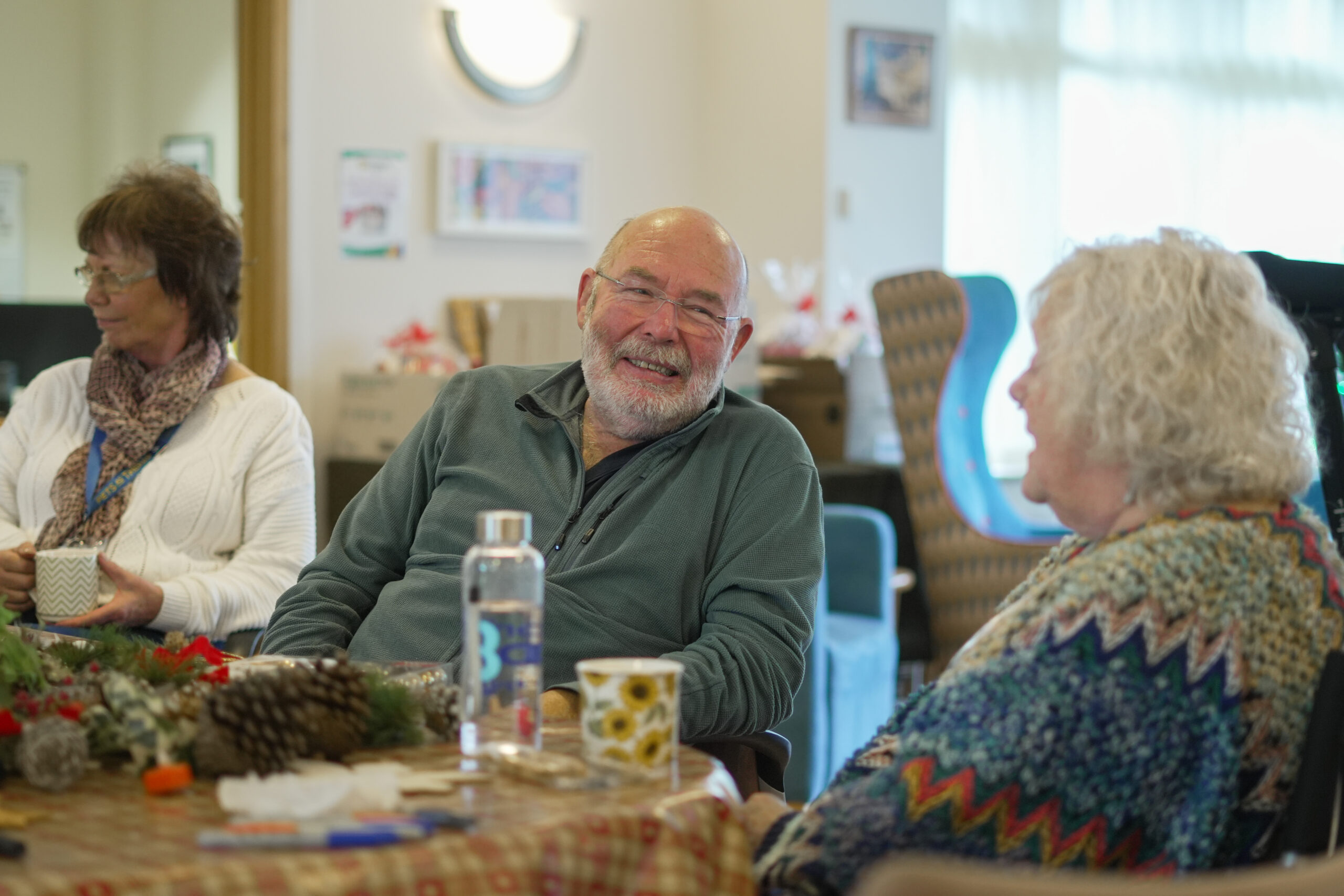
For Alan, who has been married for nearly 50 years, one of his biggest worries is the impact his illness will have on his wife as his condition progresses.
“Most of us have got somebody who’s basically put their life on hold to look after us, and they’re going to need all manner of help as time goes by,” he explains. “What’s been really helpful is understanding what support is out there – social care, carer support. They’re doing a great job of signposting all the sources of assistance.”
Alongside practical guidance, Alan highlights the importance of simply being with others who understand. “The most important thing is the camaraderie,” he says. “Getting to chatter with people in the same situation as you.”
A safe place to be yourself.
Sonia, who was diagnosed with motor neurone disease two and a half years ago, describes the group as something she always looks forward to.
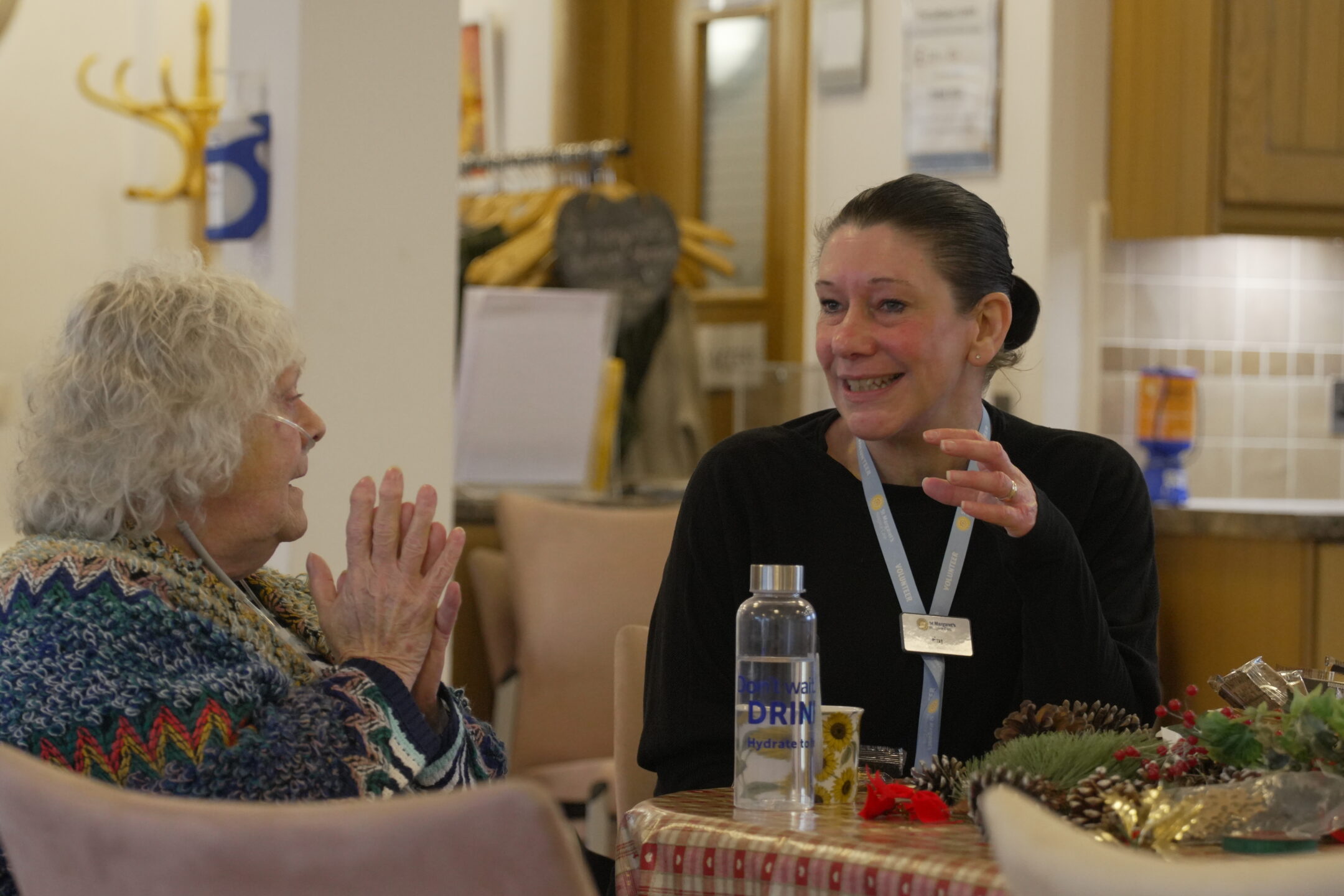
“It’s just so lovely,” she says. “It’s a lovely way to get out of the house, meet people, and just have a good laugh or cry with other people. I absolutely love it.”
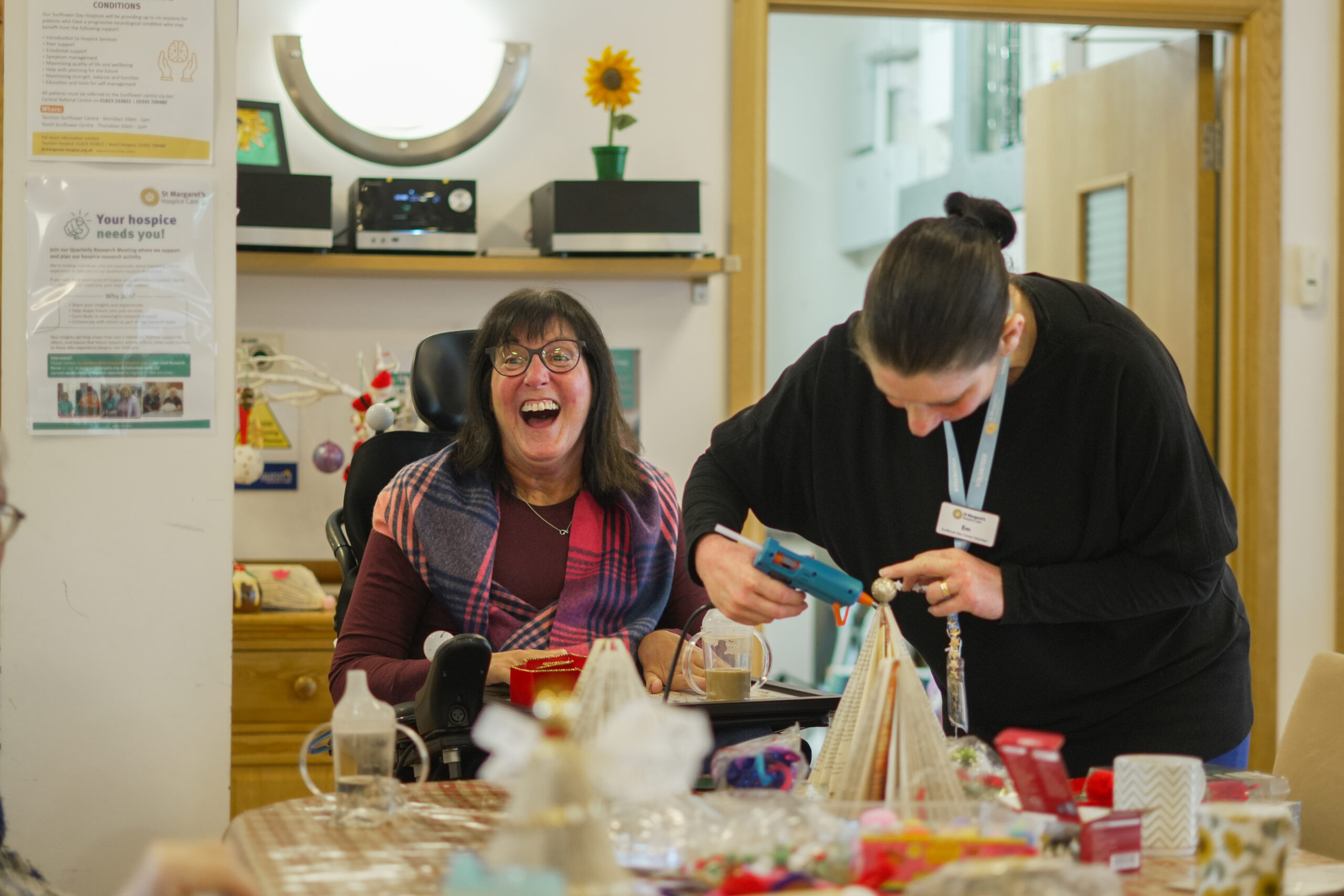
Before her diagnosis, Sonia was active and sporty. The changes brought by her illness have been devastating, but the group has offered her something she struggled to find elsewhere; a place where she can simply be herself.
“It’s a real nice, safe place,” she explains. “Here, you don’t get people staring or wondering why you’re talking differently. They just take you as you are.”
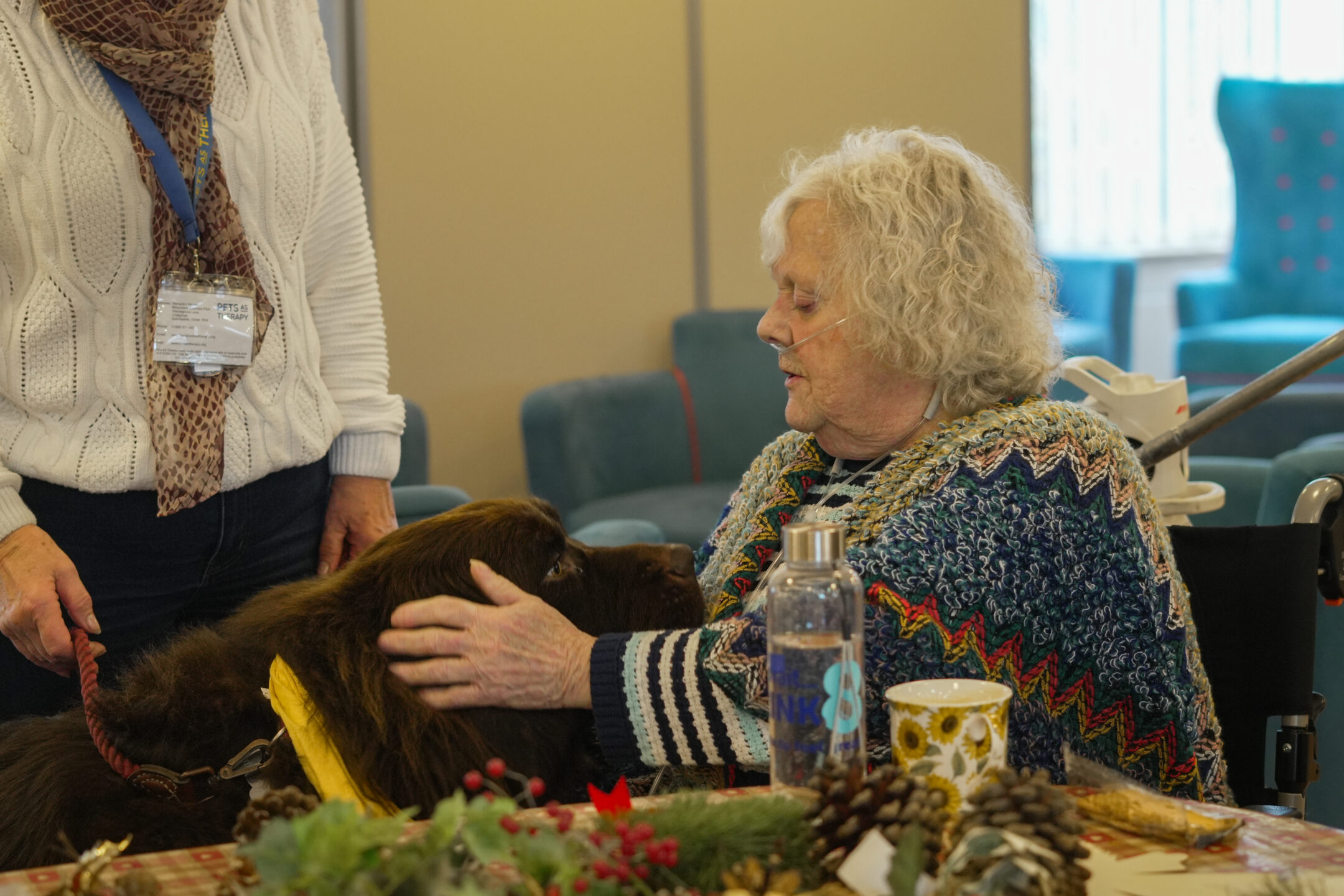
Sessions include creative activities and crafts, group sessions on relevant topics, guest speakers, and access to a range of therapies.
“They don’t let me give up,” Sonia adds. “They’ll come and help with what you’re doing.
They give you a feeling of self-worth.”Sonia
Holistic support, all in one place.
The neurological support group follows St Margaret’s established day hospice model, offering a ‘one-stop’ approach to care. Each person begins with a holistic needs assessment and can then access a wide range of support including physiotherapy, occupational therapy, complementary therapy, advance care planning, and psychological and spiritual care.
Crucially, the group also brings in guest speakers and assists with referrals to specialist services, helping people and their families navigate what can often feel like a fragmented system.
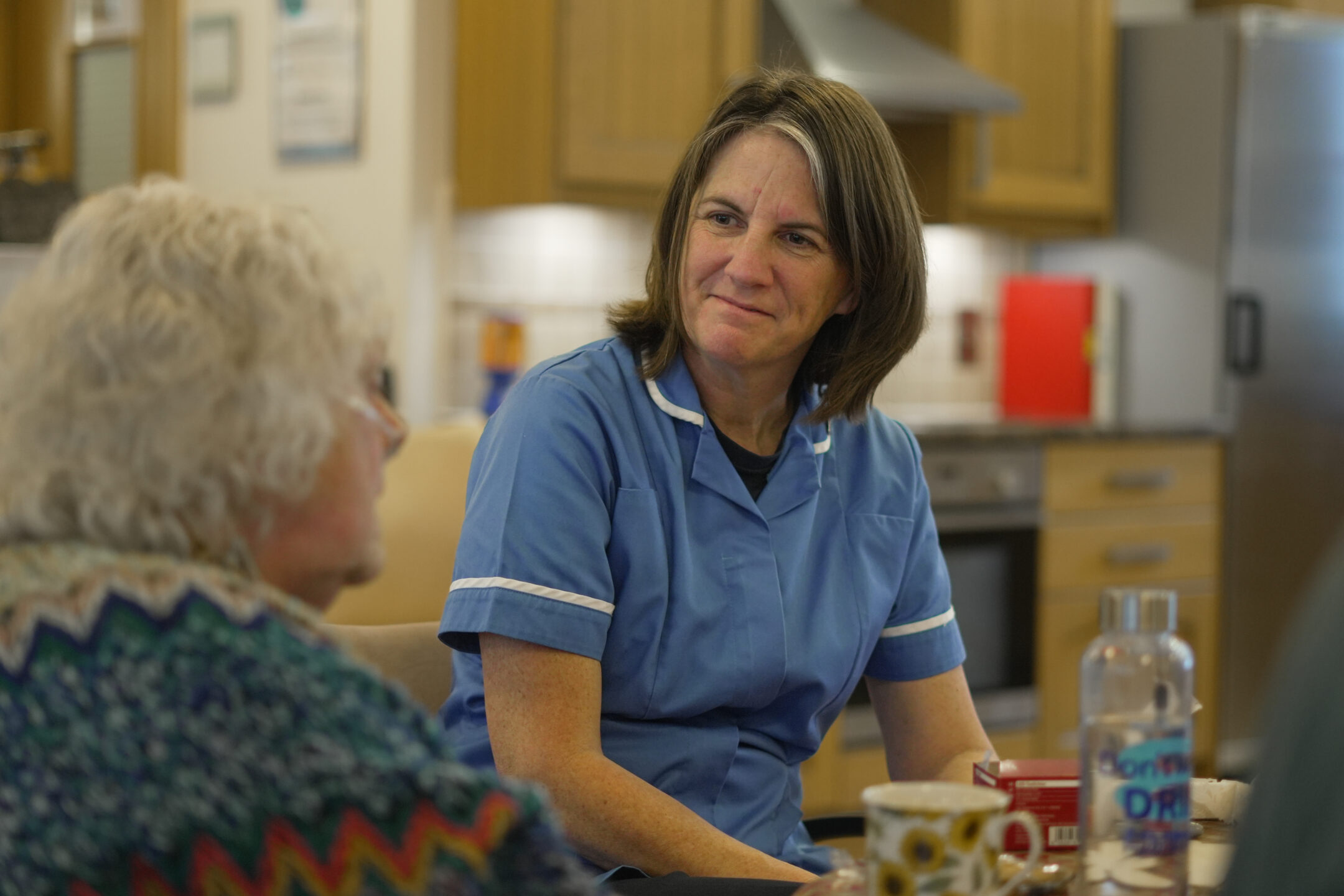
Lisa, a clinician who works closely with the group, says this joined-up approach has been key to its success.
“Patients really value the social interaction and the opportunity to share life experiences with each other,” she explains. “But they also benefit from specialist guidance – whether that’s from our core clinical team or from guest speakers talking about social work, spiritual care, lymphoedema or anything else.”
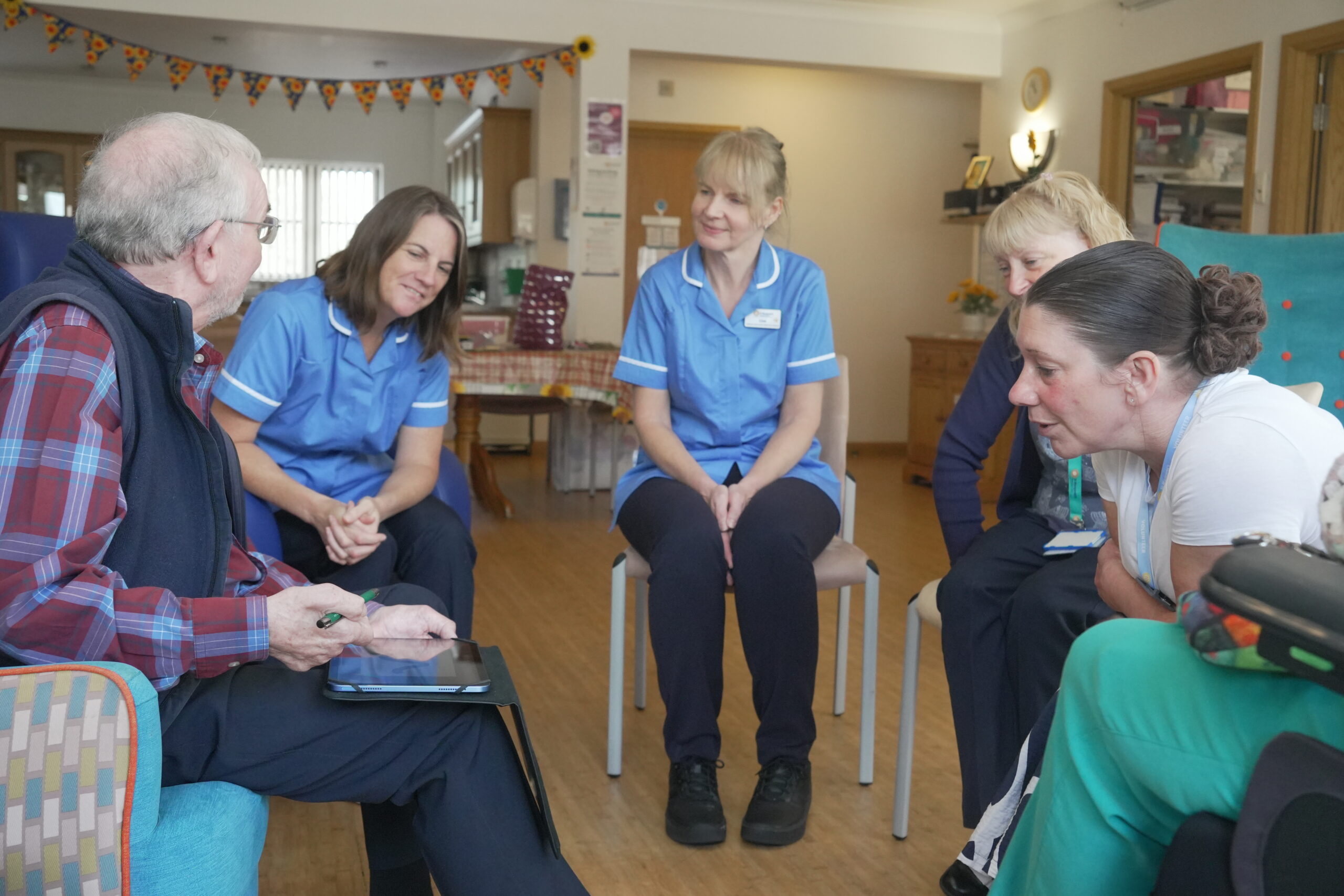
Lisa also highlights the hospice’s commitment to supporting carers alongside patients.
“It’s not just patients we care for,” she says. “We look at carers too – making sure they’re being supported, looking at the home environment, and putting help in place where it’s needed.
I feel the service is invaluable.”Lisa
From pilot to permanent provision
The neurological support group was initially launched as a pilot, responding to growing demand from patients and NHS colleagues for care tailored specifically to progressive neurological conditions. Feedback from those attending has been overwhelmingly positive, and St Margaret’s has now confirmed that neurological support will continue as an integrated part of its ongoing Sunflower Centre provision.
Amanda Wilkins, Associate Director of Clinical Services at St Margaret’s Hospice Care, says the group reflects the hospice’s wider commitment to reaching people earlier and supporting those with non-cancer diagnoses.
By extending our Sunflower Centre provision to meet the needs of patients with progressive neurological conditions, we are focusing on providing holistic and accessible services for a wider range of patients across the county."Amanda Wilkins, Associate Director of Clinical Services
The group also aligns closely with St Margaret’s five-year strategy, Time to Care – Now & Always, which prioritises early intervention, partnership working, and extending care to under-represented communities – particularly in rural areas where access to services can be challenging.
Looking ahead
As the neurological support group continues, St Margaret’s will build on what has already been learned, embedding staff training and sharing best practice with NHS partners and hospice networks locally and nationally.
For people like Alan and Sonia, the group’s value has already been made clear.
“I’m very grateful that I’ve had the opportunity,” Alan says. “For anybody out there who’s got a progressive neurological condition, this is a very worthwhile place to come.”
Sonia agrees. “They’re very welcoming people. It’s just a lovely few hours of chatting and doing nice things,” she says. “It makes such a difference.”
Do you think you could benefit from St Margaret's neurological support group?
Speak to your GP about making a referral today.