
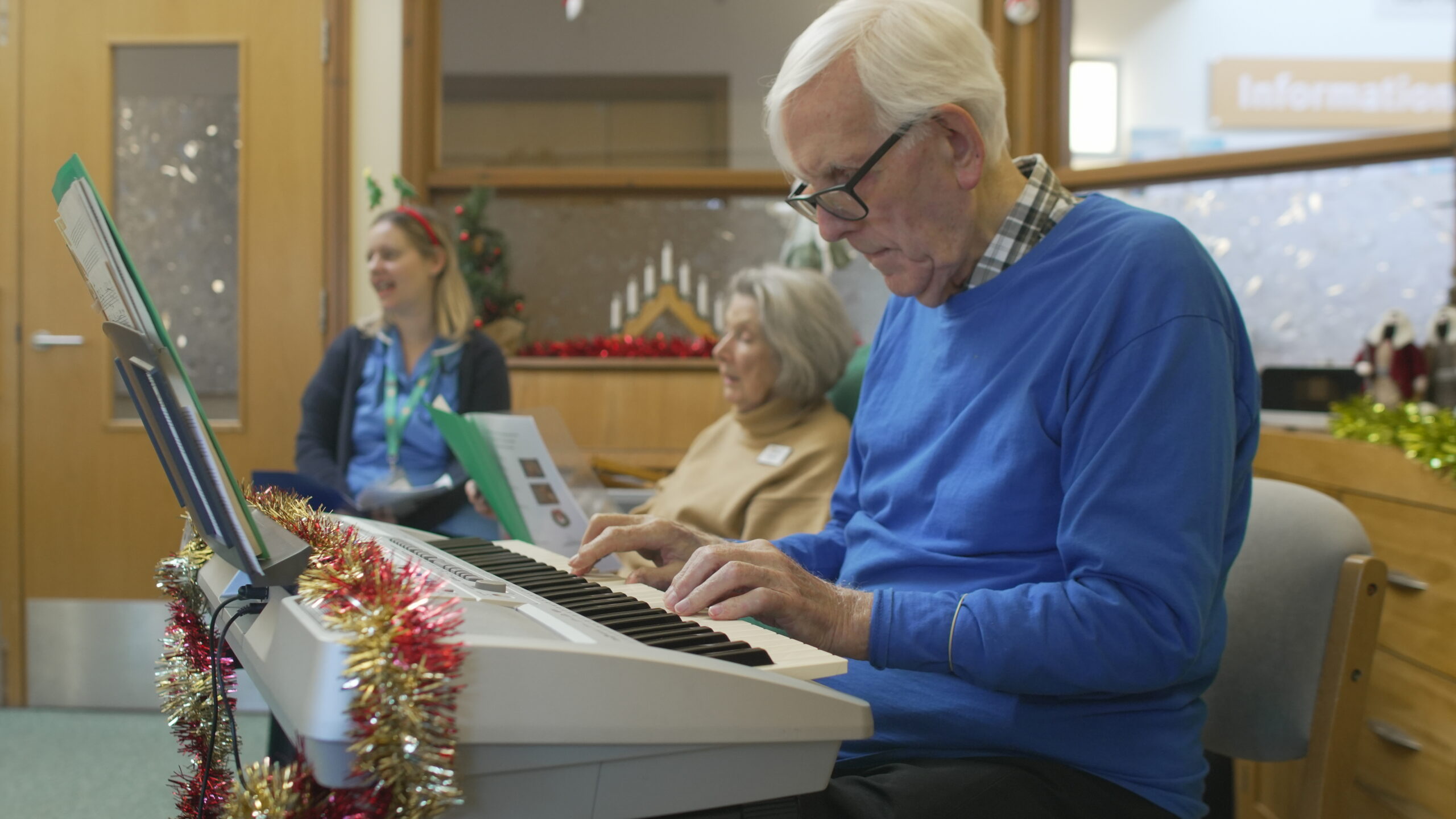
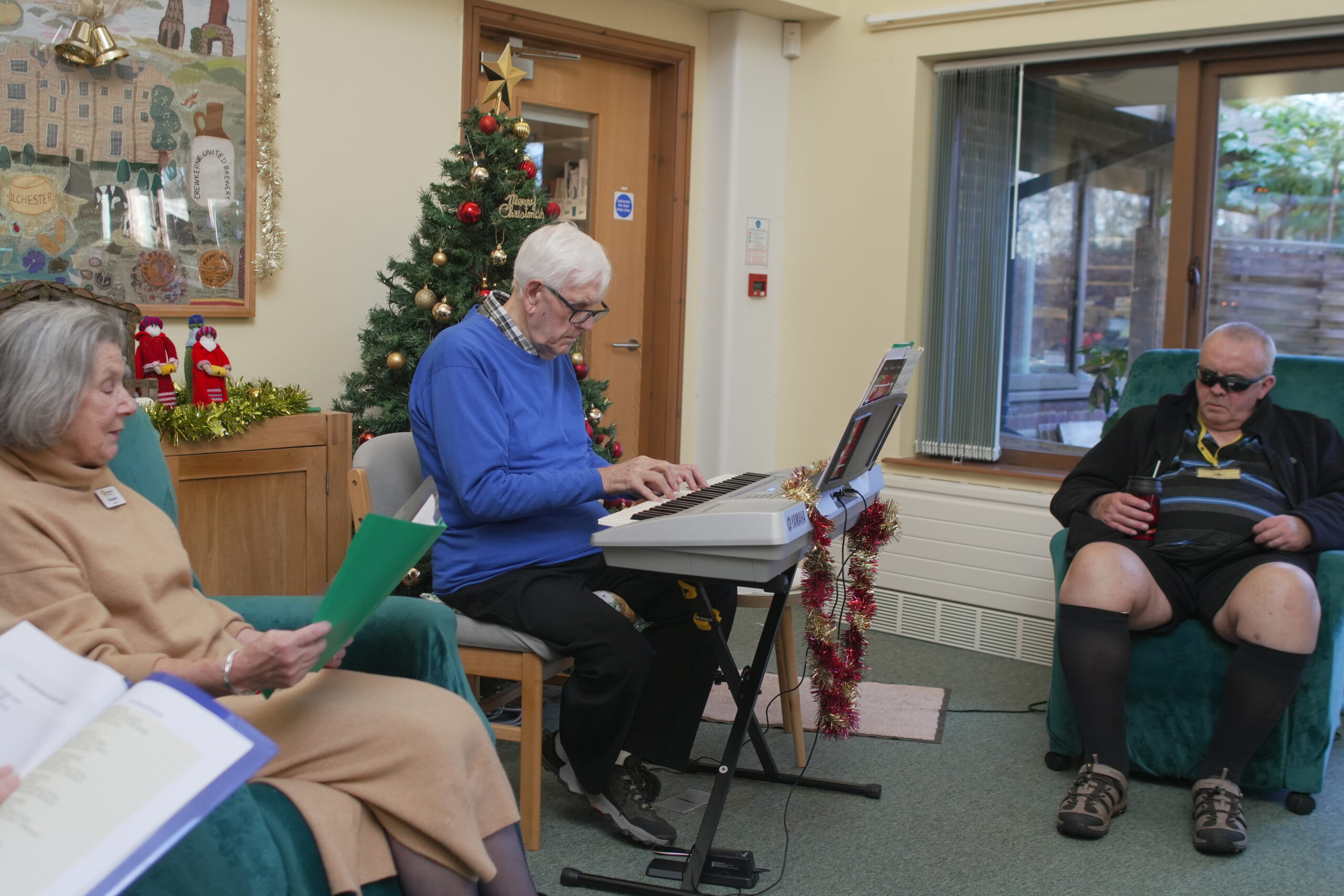
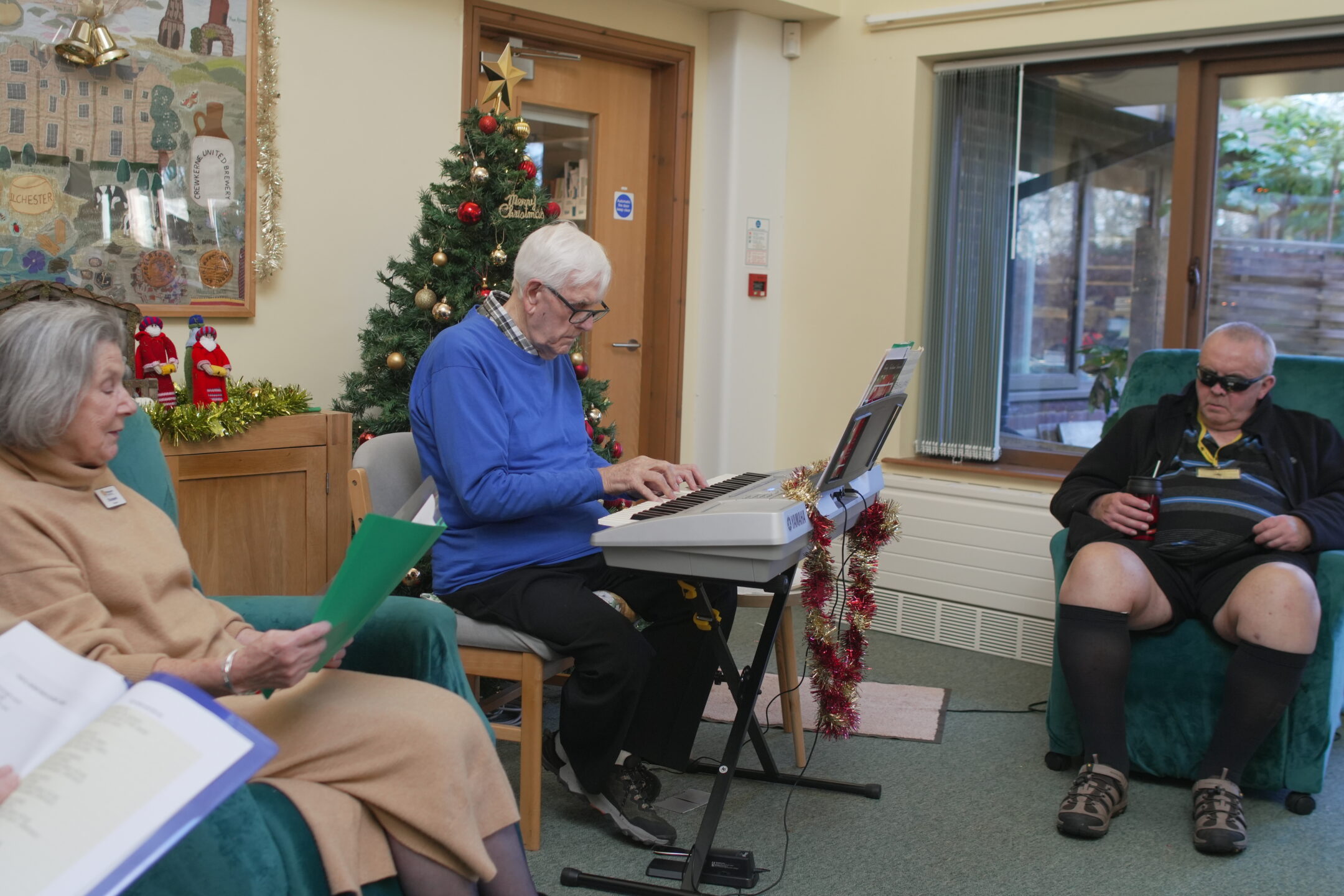
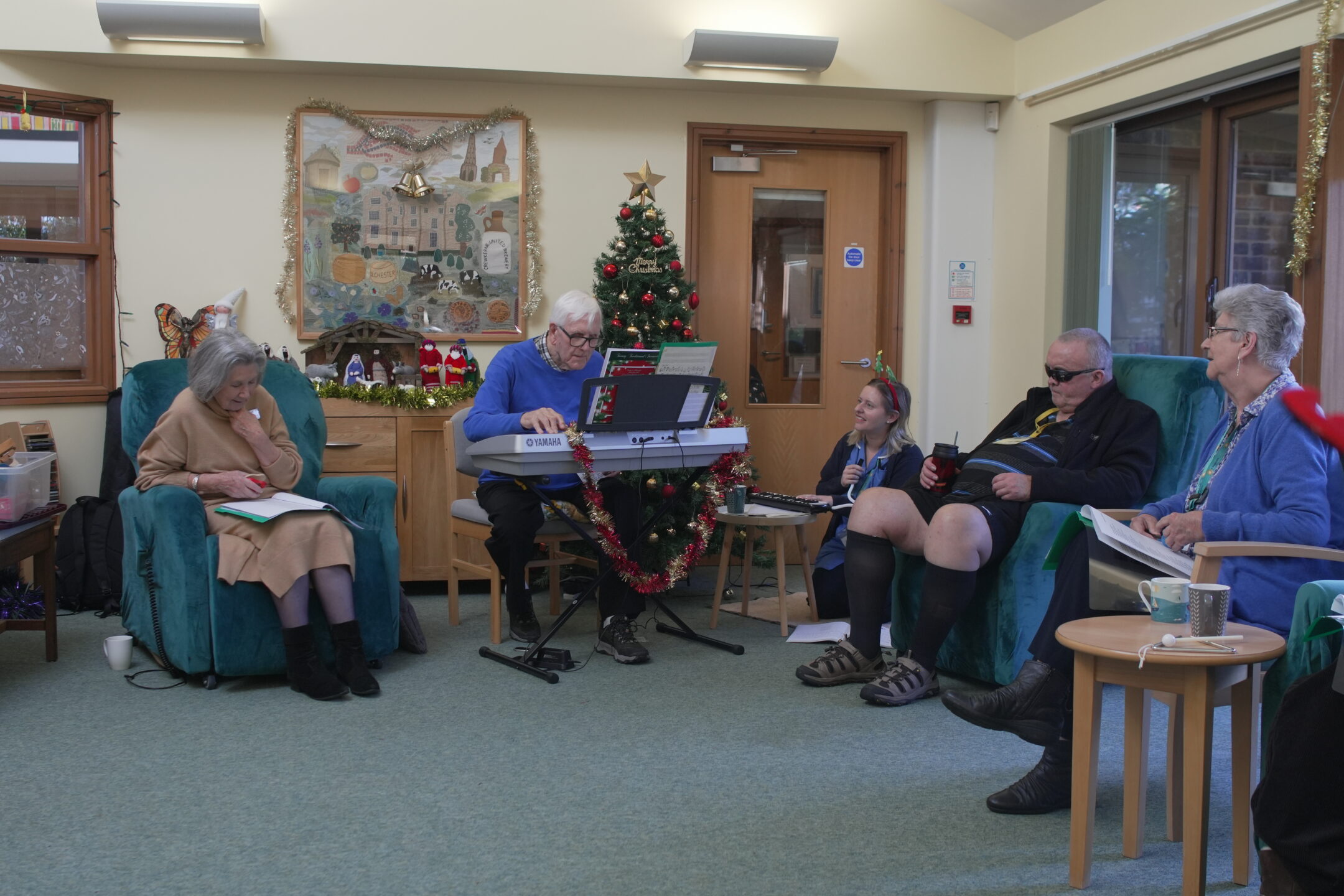
On a winter’s day with Christmas in the air, Ken sits in the Sunflower Centre in Yeovil, preparing to play keyboard in front of his fellow patients. The room is warm and full of camaraderie and encouragement.
For more than 20 years, Ken has not played in front of anyone beyond his family. Today feels like a second debut.
Ken was referred to St Margaret’s Hospice from Musgrove Park Hospital as part of his treatment for pulmonary fibrosis alongside ongoing cancer care. It was, he admits, a moment of uncertainty. But that feeling did not last long.
“Since walking through the front door, I have nothing but admiration for both the staff and the place itself,” he says. “The people here – they’re some of the nicest I’ve ever met.”
Music has been a constant companion throughout Ken’s life, even though in recent years it has drifted into the background. As a boy, he sang in a church choir, drawn in as much by the choir football team and the promise of free cake as by the hymns themselves.
Then, at 15, he joined the army.
“Like most 15-year-old lads,” he laughs, “We thought we’d be heroes in no time at all. Then this six-foot-three Major announced that we were going to be flute players. We must have looked dismayed, because he leaned down and said, ‘it’s an international language, you young gentlemen.’ At the time, we thought he’d gone mad.”
Ken chuckles at the memory. With time, he would come to understand exactly what the Major had meant.
After leaving the army, Ken widened his musical horizons. He learned the clarinet and the saxophone and joined an orchestra, eventually moving into teaching and passing on his knowledge to the younger generation. At that point in his life, he says, he was a wind player through and through.
“I do enjoy seeing people being creative. I don’t know too many other ways of being creative other than music. It’s a wonderful tonic.”Ken
In the 1980s, there was, as Ken puts it, ‘a massive draw towards home organs.’ It was his late wife who encouraged him to give one a go. “She said, if you’d like to take lessons, I’ll pay for them. But I was petrified, absolutely petrified,” he remembers. “With an organ you’ve got your hands and your feet going all at once. It’s not like a flute where you’ve got two hands and your breath and that’s it.”
Still, he signed up for lessons in what he calls “a moment of terror,” and the home organ became a source of joy and creativity for many years. Much later, when Ken and his wife moved house to be closer to family in Yeovil, they discovered at the very last moment that the organ would not fit through the door. After some panicked consultation, Ken decided to swap it for a keyboard – the instrument he plays today.
Music brought friendship and connection over the years, but illness and loss gradually reshaped Ken’s world. His health affected his ability to play, and the death of his wife changed everything.
“We were married for nearly 60 years,” he says. “We went to school together. We were evacuated during the Second World War. It ripped me apart – absolutely ripped me apart.”
To help him recover, doctors, nurses, and members of the Sunflower Centre team gently encouraged him to find group activities. At first, he struggled. His interests – photography, sketching, painting – were all solitary occupations.
His love of music began to stir again when a family moved in near to Ken’s flat. “They had two youngsters. One played the clarinet, and the other played the saxophone and the flute. I would hear these youngsters practice from my place and it was a tonic for me. So I thought, well, come on, get yourself moving again. There’s more to life than this.”
At the Sunflower Centre, Ken found support that went far beyond the medical. Alongside physical care, there was emotional support, practical help, and time to talk about what mattered to him. Staff took time to know him – not just his diagnosis, but his history, his interests, and the things that had shaped his life.
A conversation with members of the team, including clinicians Emily and Kim, planted a seed. The Sunflower Centre had hosted a choir the previous year. Would Ken consider playing something for a lunchtime gathering?
“I said I’d try, if they’d give me a little bit of mercy,” he says. “I haven’t played outside the family for 21, 22 years.”
On the day itself, there are added challenges – a different keyboard, unfamiliar settings. Ken feels nervous.
“I was struggling,” he admits. “I’ve always had this dream to one day take part once more, but it terrified me thinking of actually doing it.”
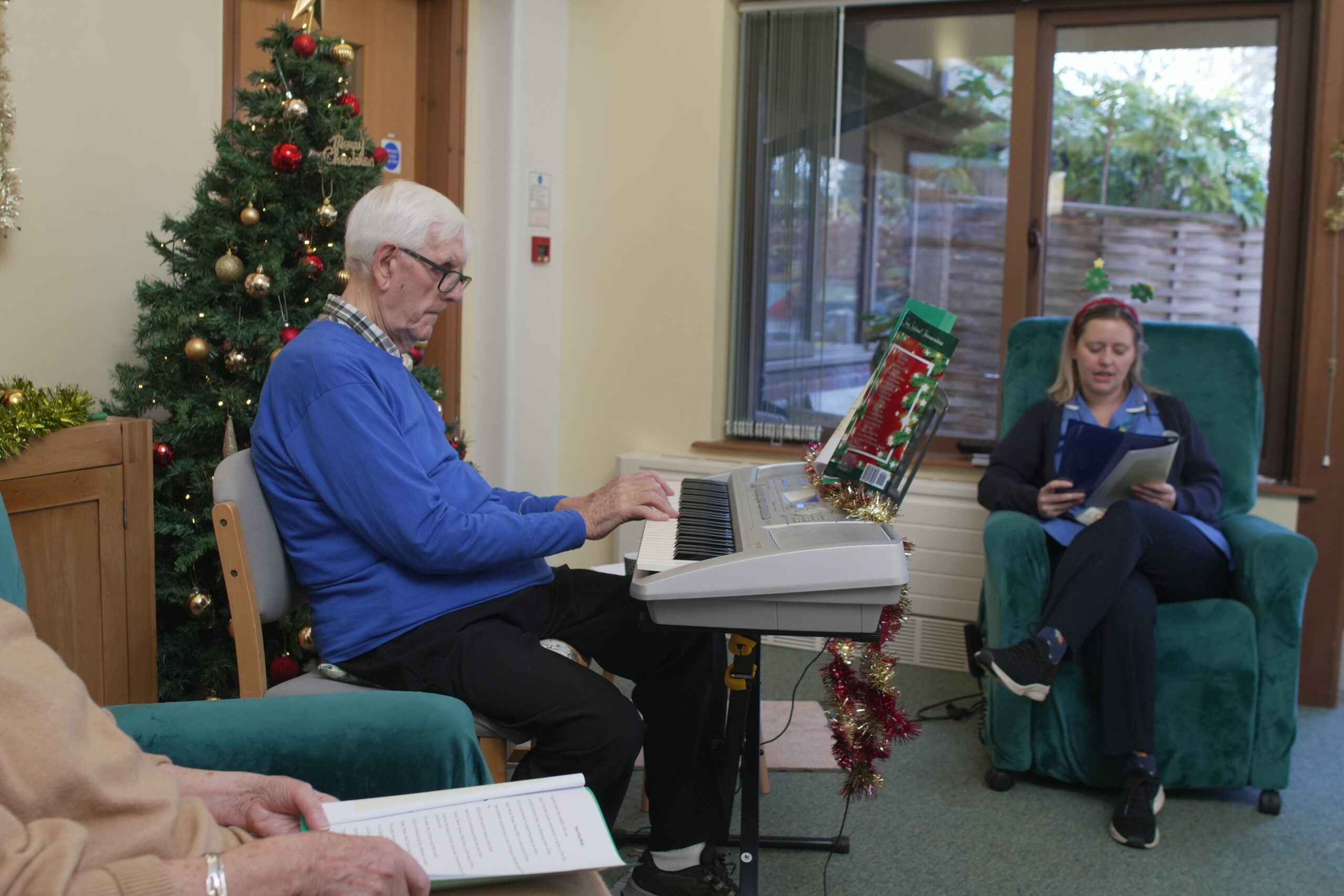
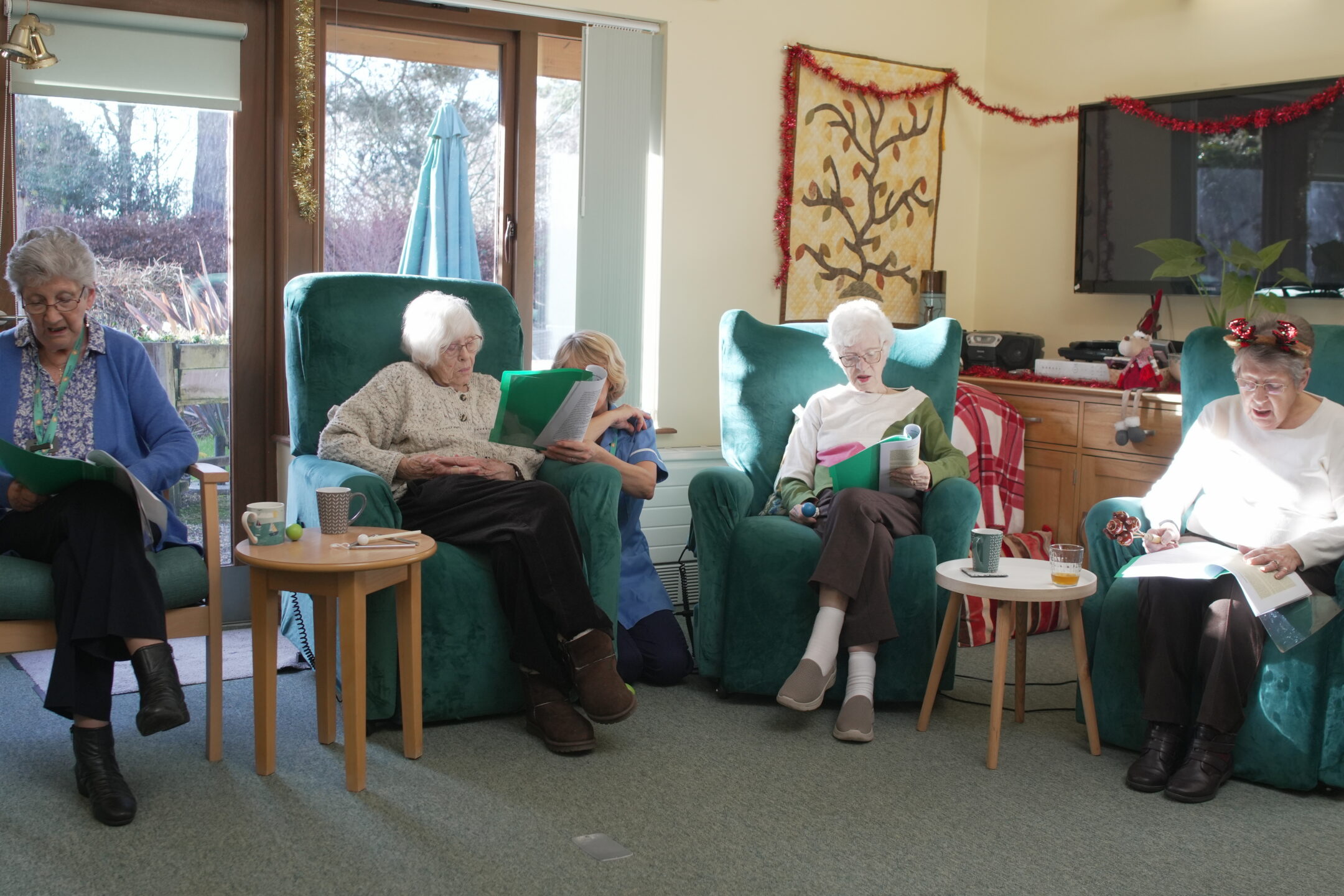
As he begins to play, the room joins in. Voices lift with the music. The people around him – patients, staff, volunteers – join in with singing, some shaking small percussion instruments in time. Laughter ripples across the room. For a few moments, the weight of life-limiting illness feels a bit lighter.
Kim, whom Ken has been teaching to play, joins him for a duet. Then, he leads the room in an anthem rendition of You’ll Never Walk Alone. For that moment, no one is defined by diagnosis. There is simply music: the international language.
At St Margaret’s, moments like this are at the heart of everything we do. We are proud not only to care for people’s physical needs, but to help them rediscover confidence, purpose, and the things that make them feel most themselves. For Ken, that meant returning to music – and finding the courage to share it once again.
By taking time to truly know the people we care for, we help make space for moments that matter. Sometimes those moments are quiet and personal; sometimes they are shared, joyful, and full of laughter. What they all have in common is the way they create lasting memories and remind people of who they are, beyond a diagnosis.
Ken’s performance was a reminder that even in the most challenging times, there is still room for connection, creativity, and joy. At St Margaret’s, we are proud to help make those moments happen, building precious memories and ensuring people live as well as possible for as long as possible.