
Introduction and guidelines
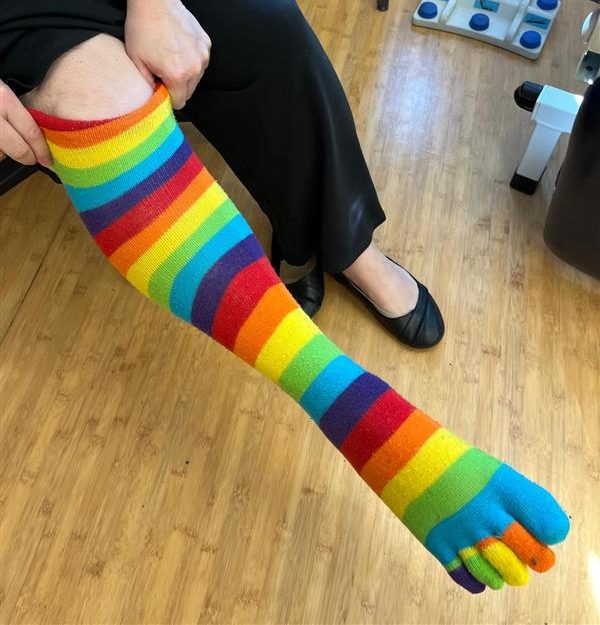
Compression hosiery
As part of your treatment plan, you may be supplied with an item/s of compression hosiery. These may be given to you at an appointment, posted out to you, sent direct to you by the manufacturer, or you may be asked to collect it from St Margaret’s Hospice, or from one of our outreach clinics.
These garments vary in price and due to their cost, it is important that you:
- Follow the Manufacturers washing instructions; do not use fabric conditioner and remember to let your hosiery dry naturally – not on a radiator or in a tumble dryer
- That you do not cut, stitch or alter your hosiery in any way.
Compression hosiery is worn to help limit the formation of lymph fluid and to provide resistance against which the muscles can pump and move the fluid more effectively. Garments may help to reduce the oedema (swelling) and maintain the reduction.
Guidelines for wearing hosiery
You should be supplied with 2 garments. Please wear them evenly as failure to do so may give different control to the oedema.
- Apply hosiery early in the morning, wear all day and remove when you go to bed
- If you have very mild oedema you may have been advised that it is only necessary to wear your compression occasionally or for part of the day. Please make sure that you wear it during activity.
- You can use rubber gloves to apply your hosiery; household or gardening gloves. This not only gives you a better ‘grip’ on the garment, but also helps to prevent it tearing or laddering.
- If you have any doubts about how to put on your garment, ask your clinician to remind you.
- Try not to apply hosiery directly after you have applied moisturising cream; this makes it ‘sticky’ to get on and may damage the fabric of the garment; wait at least 20 minutes if unavoidable.
- Ensure there are no creases or wrinkles. The garment should feel firm, supportive and comfortable
- Do not fold the garment over at the top.
- If you find your hosiery tightens during the day, think about your movements as too much activity or too much rest can increase swelling.
- If you do work hard, rest with the limb elevated for at least 30 minutes or if you have been resting take gentle exercise. If it continues to be too tight, please remove it and get in contact with us.
- Garments should be replaced every 6 to 12 months.
- Please contact us if it becomes worn, laddered or loose in the meantime.
- Check your skin on removal of the garment. Pay attention to any blisters or broken skin, treating appropriately. If you have any concerns please contact the team.
- If you are unfortunate to develop an infection (cellulitis) please remove your hosiery until you have started a course of antibiotics for up to 48 hours, then re-apply when comfortable to do so.
- Please check the colour, warmth and sensation in your fingers/toes when wearing the hosiery. If you notice a change of colour, warmth or any new tingling, numbness, cramp, throbbing, pins and needles or pain – remove the hosiery and contact the team.